An Interview with Alain Martin on “The Forgotten Occupation: Jim Crow Goes to Haiti”
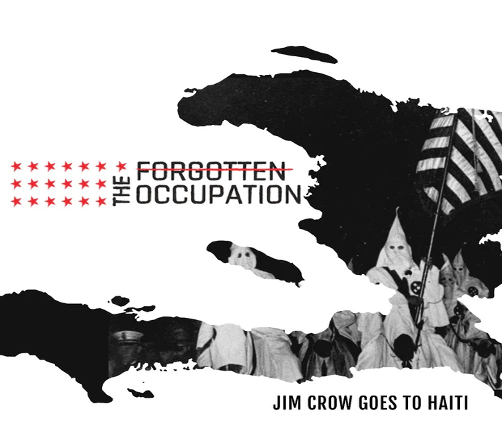
Event Description: March 5th, 2026, the People’s Forum hosted Alain Martin at the Paul and Eslanda Robeson Cinema. Film description: Through a letter to his grandfather, a Haitian filmmaker revisits the U.S. occupation of Haiti, unraveling the paradox of a man who longed for American rule and a nation scarred by it. Blending intimate memory with sweeping history, the film confronts exile, love, and the uneasy truths at the heart of freedom. Haiti | 2023 | Alain Martin | 90m
Introduction by Ayanna Legros
Oftentimes when Americans speak to me about Haitian history, they mention one of two things: The Haitian Revolution or Papa Doc/Baby Doc. If the conversation extends beyond fifteen minutes, they may mention the 2010 earthquake. If the person knows a little bit more about Haiti, then they may mention the Dominican Republic’s historical mistreatment of Haitians.
Once the conversation floodgates are opened I discuss enslavement, colonialism, imperialism, geography, coup d’états, paintings, sculpture art, spirituality, songs, health, language, religion, fables, oral histories, family history, my favorite books, critical films, and my own analyses formed through years of reading, research, studies, travels, conferences, publications, and conversations. The other person is often left unsatisfied. I observe their blank stare. Their eyebrows crinkle. I look at their face. They look at mine. Then THE lingering question comes to the surface. “But why is Haiti like that?” I sigh and respond with three words: “Haiti is complicated.” Patience is important because I know that a lot of information is left out of the history books. Also, world history is taught in fragments. In “global history” courses students learn about European kings, the Ottoman Empire, China’s dynastic rule, Germany during World War II, Egyptian history (a floating abyss that lives outside of Africa), India’s spice trade, Christopher Columbus’ “arrival to the New World”, Ancient Greece and Ancient Rome’s “glorious past”, and the Aztec empire.
Similarly, “US history” is diced into chapters like the American Revolutionary War, Native American massacres, the Great Depression, Bay of Pigs, Chinese Exclusion Act, the Civil Rights Movement, and a plethora of other “small” and “large” events. So, it is unsurprising to me that the average American is unaware that the US ever occupied of Haiti, but the problem is that the average American does not understand why US politicians are obsessed with Haiti. Haiti is always on America’s mind, and it is blamed as the origin of many social ills of this world. Most Americans are familiar with the slurs and insults politicians make about Haiti today, but if I were to ask an American about the origins of these toxic ideas, they would say, “I don’t know.”
So, this is where Alain Martin’s film enters the room. Alain Martin, with an intellectually rich and creative crew, embarked on a journey to uncover the complicated relationship between the US and Haiti by creating a rich film that discusses the inception of Haiti’s occupation in 1915. I was unsure of what to expect with this screening. I saw a segment of the film several years ago and took issue with some artistic decisions and was dismayed with the opinions of people included in the film. I decided to give it another shot. I went to The People’s Forum screening and was awestruck by the end. The film is truly a masterpiece, and I hope one day to see the extended version that is two hours and forty minutes long. This film is for everyone. The ideal viewer is someone who wants to understand the origins of the US and Haiti’s complicated relationship. I also believe that anyone who is interested in witnessing an example of how to do a family history project would greatly benefit from seeing it. Finally, anyone who is brave enough to learn a different perspective of US history from the viewpoint of a Haitian should see the “Forgotten Occupation: Jim Crow Goes to Haiti.” Following The People’s Forum screening I spoke with Alain Martin in more depth about the project
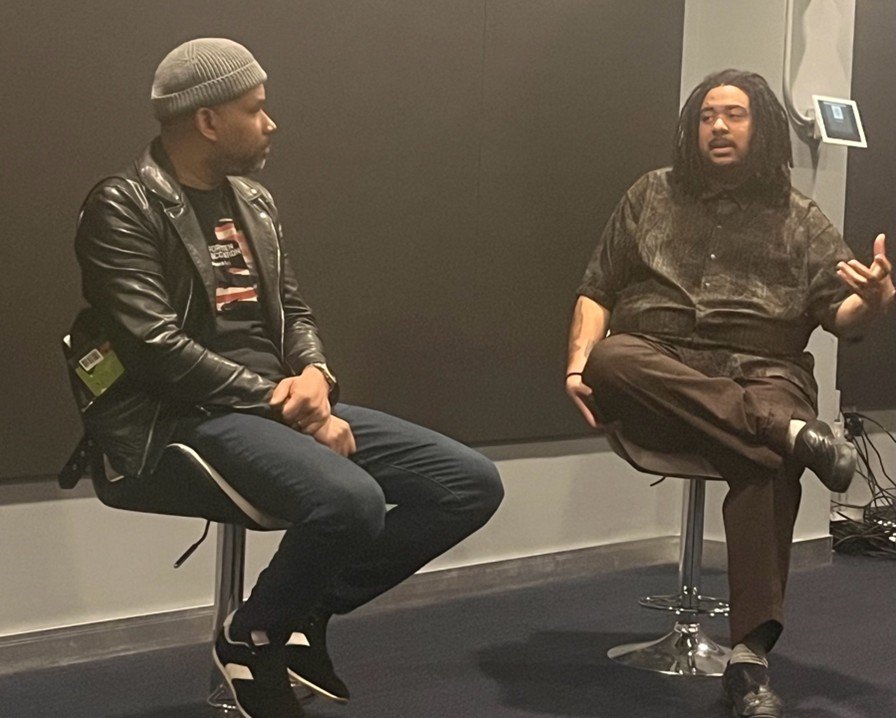
Q&A with Caribbean Defense Organizer Lyndon Nichols and Alain Martin (Photo by Ayanna L)
Ayanna: Tell me about yourself. How long have you been a filmmaker? Start 101 with me.
Alain: Yeah, you know, that's also a loaded question. How does one become a filmmaker? I don't even know. I still don't feel like a filmmaker. I still feel like some sort of imposter. I think I was doing a radio interview in New Orleans and a person wanted to introduce me as “an acclaimed documentary filmmaker” and I thought, “What?! Whoa! What is this guy talking about?” I will say this. When I was in college, I shot a couple of short films. My thesis got an A+ and I lost it. I think in retrospect that film foreshadowed the style of this documentary and I'm really mad at myself for losing that film. Back in those days when I shot on film and took it to a lab in Manhattan to get developed, I was broke. It was like $160 to get it and I just didn't have the money. I kept trying to save it and the lab ended up closing. I don't know what happened to the materials. I shot a couple of short films over the years, but I guess this is really my achievement. We started shooting this in 2011. I don't know what that means. Are you a filmmaker after you have a complete film? Are you a filmmaker before that? That's the best answer I could give you.
Ayanna: How old were you when you picked up a camera? It could be a photography camera or a film camera.
Alain: Got it. So, in that sense, I'm probably going to say maybe 6 or 7 years old. My grandfather, like so many of our Haitian elders, had those cameras that he carried around to take pictures of important events. So, I used to use that camera to snap pictures. There is very old footage of me at seven years old. I noticed somebody putting a camera on me and then I started acting on it. My grandfather had a camera to snap pictures, and I used to use it to snap pictures. I remember my first time being on camera. I think one of my father’s cousins came with a camera and started filming me and my little cousin. We were so blown away. So, we proceeded to act out like those characters in the action movies saying stuff like, “Nobody can defeat me!” At eleven years old my mother bought me my own camera as a birthday gift, and I was so obsessed with it. So, I took a series of pictures. I still have those pictures. One [camera] got stolen and that broke my heart. The first time I picked up a film camera was in college. We had to load up the film and load the camera. It was really intense, but at the same time immersive and it's something that I loved.
Ayanna: Well, this actually transitions very smoothly into one of the things that I was curious about. Sometimes when we see photography and film projects, we see the adults [only] working on a project, and [so] I was really intrigued when you told me that a very young person helped you take that shot of Jacmel. I have such beautiful memories of Jacmel.
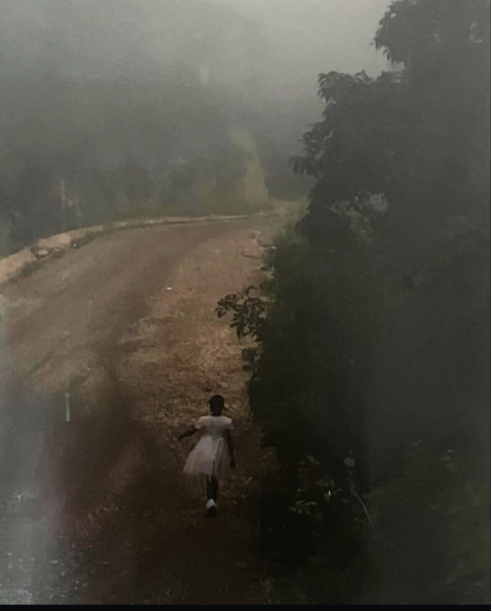
“Church Girl in La-Vallée de Jacmel”, 2016
Photo by Ayanna Legros
It just brought up some nostalgia and memories to see that gorgeous [drone] beach shot. So, I just want to know what role did children play in the making of your movie? I mean, you literally have your kids in the movie as you walk with them to the gravesite, but I'm also curious to know how children showed up for you.
Ciné Institute Logo (Courtesy of Website)
Alain: So, one thing I'm going to say that I'm very proud of is that I worked with the Ciné Institute in Jacmel, the film school. I have two graduates from that school who helped me work on that film. So, to me that was a point of pride for me to kind of do that and to make sure I included the talent of my childhood home in the film. Also, we were shooting this film during the pandemic. I couldn't go to Haiti, so those drone shots in Jacmel came from this young person that they put me in touch with. We never even met. We communicated strictly through phone and emails, and I told him what I wanted and he said, “I got you.” And his work turned out to be beautiful.
Ayanna: How old was he?
Alain: I think he was no older than maybe nineteen or twenty at the time. Yeah, he was a very impressive kid.
Ayanna: It sounds like including young emerging artists was very important to you.
Alain: Yeah. He's a young man. He had his own equipment, and we could have done more drone shots, but [his] drone was damaged because of another project he was working on, so we had to cease working together.
Ayanna: I loved the drone shots and the images of the cemeteries in Haiti. Cemeteries in Haiti are so beautiful – the colors, the architecture - everything. What was that experience in that space outside of what we all saw on the film, especially with your children? How else did they respond? I know you made them say their ancestors’ names, but what else was it like?
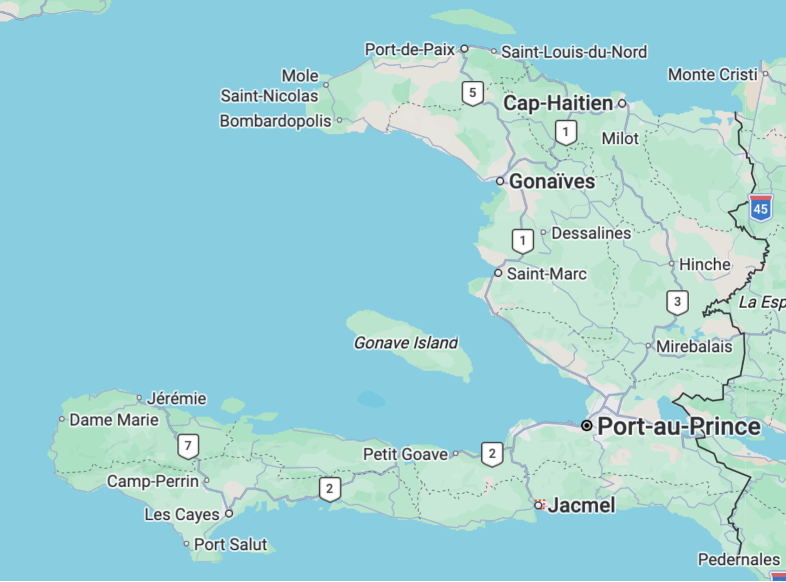
Jacmel is located on the Southeast Department of the island (Google Map Image)
Alain: Well, I'll tell you what, first of all, it was my first time in Jacmel in quite some time. I had not been to the cemetery, even longer than that because going to the cemetery was like a ritual with my grandmother when I was a baby. I don't know if it was every week or every month, but I just know that she had a ritual of going to the cemetery and bringing flowers and talking to her mom and her dad, so that's something I've internalized. I wanted to share that experience with my kids to go to the cemetery and talk to the ancestors, know where they're buried, and know who's who. My great grandfather, my grandmother's father, would visit him. I never met him. My grandmother talked to him so much at the cemetery. It felt like I knew him and that I had met him. I wanted to import that same experience to my kids, but I haven't been to Haiti in such a long time with the conditions. It meant a lot to me to see my son at the cemetery talk to his ancestors.
Ayanna: Yeah, it was a very beautiful scene. I saw a shot of a Catholic school. What kind of schools have people historically been to in your family? I was very curious about the role of the church, which you definitely touched upon, during the U.S. occupation, but what kind of schools did you go to? Do you believe that the church played a role in how people remember the history of the US occupation in Haiti?
Alain: I think it's a fair question. I think my grandfather didn't go to high school, even though he was supremely educated. They say he came to Jacmel as a young boy and didn't do a secondary education, but I think that was the case for most people of the world anyway, right? Going to high school was not mandatory as it is now. So, my father went to the same school that I ended up going to, which was a Catholic school run by Canadians. Going to school is going to church, because that school itself, was very church driven. We had to attend church every Sunday, and they give us a yellow card. They would punch a hole in a yellow card, and they would add up all of the Sundays. You [had to] attend church every Sunday and if you missed a Sunday, it took your numbers down.
Ayanna: Oh, my God.
Alain: With that being said, I'm not religious now, but when I was growing up, I loved reading the Bible. I loved reading stories about Jesus, but that's because I loved the storytelling. I loved the conflict – the arcs. The literature of the Bible and the literature, on Jesus, got me into it. So how do you credit the church for that? We learned, I learned very little about Haiti, outside of the Haitian revolution, and the church itself, is sort of how [we were taught to] live in reverence of this white image of Christ, this white image of the church itself…looking up to the pope and looking up to the priest... It was cultural authority that you must obey. I know in my house, it was a ritual for my grandfather to watch the Ten Commandments every Easter and some movie about the crucifixion of Jesus. But all that led into this Catholic education. Of course I got my first communion. I had to go to church, memorize certain sections of the Bible before I could even do that communion. The church was a huge part of my identity growing up, and it's kind of amazing to think of it now. Now, I hardly stand for in a church outside of marriage or a funeral.
Ayanna: Thank you so much. That was a great answer. I can only imagine that while making this project you went through different kinds of emotions. Being in an archive can be an emotional process. The other day I went to New York University's Tamiment Library and Robert F. Wagner Archives, and I was looking through a document about the Domsey factory, in Brooklyn in 1990. While I was doing that, I accidentally stumbled upon a folder that had content about the KKK and images of cross burnings. I'm like “Whoa, whoa, whoa! I did not come here for this!” I almost had to disassociate and literally just wash it out of my brain as if I didn't see those images so that I could stay focused. There are many shots of you going through photographs and being physically in libraries and archives. Was there a moment that maybe surprised you? Did you go through different emotions like anger, shame, sadness, and did you shed tears?
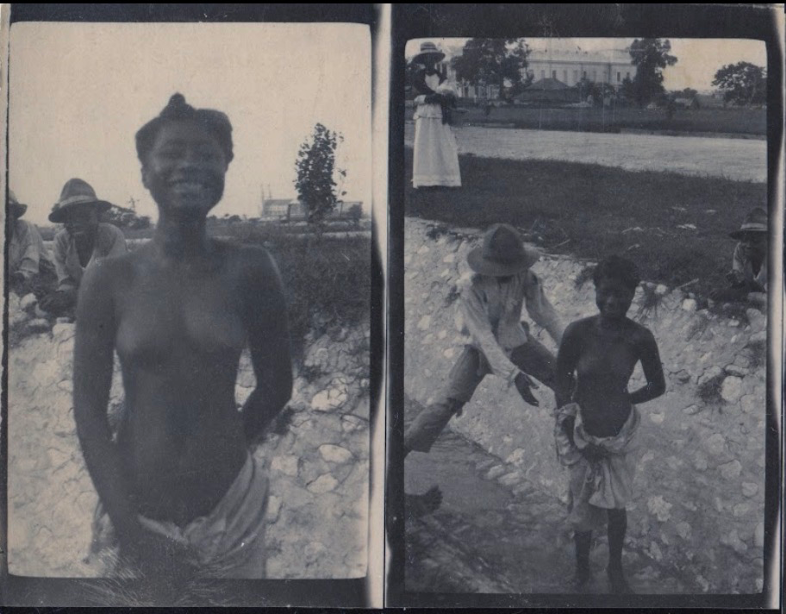
An unused photo collected and stored on a hard drive for potential usage
Courtesy of Alain Martin
Alain: I can tell you of a couple of things, but listen, there's one that was almost surreal. I had spent so much time just reading about the occupation, so going to the archive and seeing the faces of the men that I [had] been reading about… I’m not gonna say it was a surprising moment, but it was almost a coming home moment. Coming across the photos of the prisoners shocked me in the sense that a lot of these photos evoked events or images, at least for me, of the Holocaust, right? [They are] being huddled together in these prisons. You can tell that they're starving and that they're poorly kept in their uniforms. You [see] the brutality of it. While I was doing my research on the occupation, the sources I looked at did not talk much about women.
Ayanna: Yes, I wanted to speak with you about that!
Alain: So, coming across prisoners, [specifically] photos of women prisoners shock[ed] me. I thought, “Why were these women arrested?” There's very little information as to why they are arrested. I could only let my imagination do the work about what must have happened to these women in these prisons. You see them being looked over by male bodyguards. So that was kind of shocking. [What was also] shocking is the stuff that I didn't find. I was really looking; I was at least expecting to find even more pictures. Because again, I guess my first experience with archives or footage is the Civil Rights Movement, and in the 60s you see everything. The occupation happened in the countryside in 1915. The technology of the camera was still kind of new. At the same time, when I went to Virginia one of the archivists told me that there are over 5,000 collections – 5000 personal collections on the US occupation, but they're not organized digitally, because no one cares about them. Not much attention is paid to it. I have to say, going to the “archive of houses” was one of the best things for me and researching this film.
Ayanna: When I was watching the film, I felt like I was also seeing images of 14-year-old boys. I felt like I was seeing these young boys in these gruesome labor situations. When I saw the bare-chested woman around the troops I had an immediate vocal reaction.
Alain: I can imagine.
Ayanna: Did you find any images of Haitian girls specifically?
Alain: Yes, I did. Yes, I did find Haitian girls. I can share some of those with you because I collected too many images at the national archives. Not all of them made it into the film. But yeah [there are] pictures of young girls working – doing laundry, hanging clothes up, cooking, playing with [the] children of the white troops. The only thing I'm gonna say that shocked me, or that surprised me [is] there's this collection in Quantico about the marines and the families in Haiti, and you could tell that they're living this very lavish lifestyle, right? And I thought, “Wow!” You can see the houses that they lived in - beautiful and spacious, and they had horses, and caretakers so that was somewhat a surprise because when you read the literature in Haiti and read the Marine's personal essays they're like, “Yeah, we don't want to be in this country. This is like a terrible country. These people are backwards”, but the pictures show that they're pretty much enjoying themselves. That's not a country that you want to get out of.
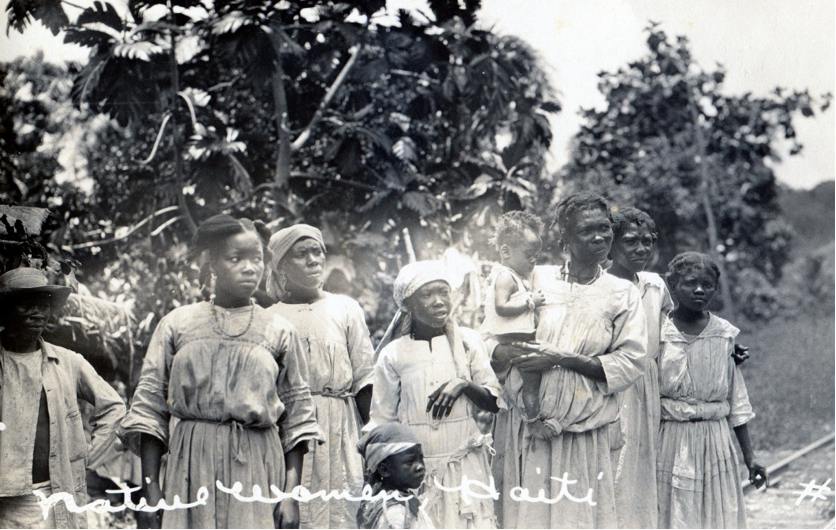
An unused photo collected and stored on a hard drive for potential usage
Courtesy of Alain Martin
Ayanna: I imagine at this point that you've shown this film in many different kinds of spaces. It felt very meaningful to see it at the People's Forum for a number of reasons. I walked in and saw all the flags and the literature, and I was in a space where people were thinking about class. I'm very curious to know what some of your other experiences are at other screenings. You don't have to name names of institutions, but what are the different experiences that you have had at different venues?
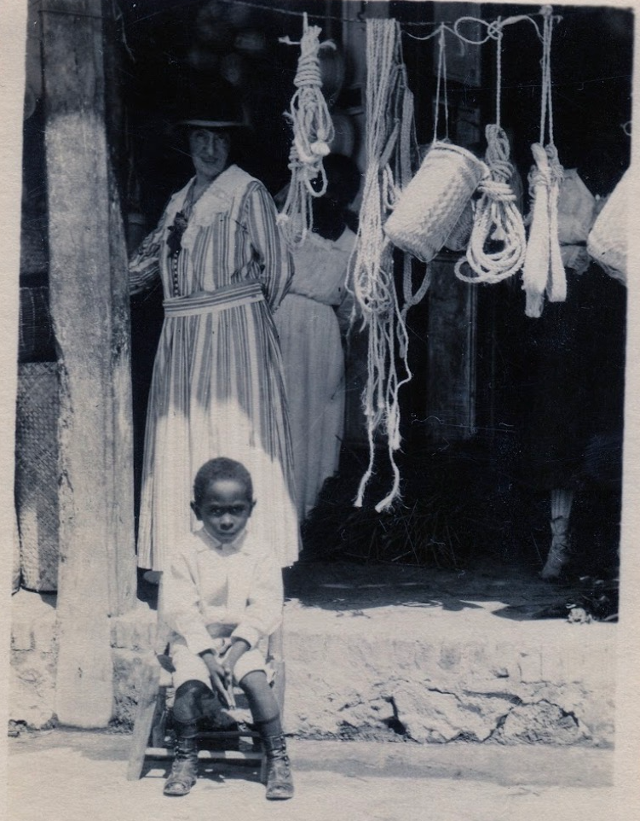
An unused photo collected and stored on a hard drive for potential usage
Courtesy of Alain Martin
Alain: I would say that last night at the People’s Forum was the most at home I felt in terms of being myself. I would also say that playing the film for the folks at KOMOKODA in Brooklyn was also home. I felt very much at home as well. I was at one venue where I felt awkward. I asked myself, “What am I doing here?” It was in [off the record] in a small town. The crowd was very religious, and they didn’t respond well to the film at all. When it came to the Q & A nobody had any questions. They had a very cold stare. One person made the comment, “I like the camera transitions.” I was supposed to be interviewed by a local radio station in that town and they canceled the interview. I later found out that it was just right-wing politics.
Ayanna: How did you even get that invitation?
Alain: It was this gentleman who saw the film online and then he invited me. He put me in touch with the Black Caucus in [off record]. It was like a great experience, because there are a lot of African Americans there. It was like the largest African American audience I had. Actually, New Orleans was and my experience there was the complete opposite. I was treated like a celebrity to the point that I thought I was a celebrity [laughs]. They had such a [strong] reaction to the film that they loved it. It's a different experience in different places.
Ayanna: Do you think it's important for those people that are quiet and uncomfortable to see your film?
Alain: 1000% because in the end, we all need to challenge our worldview. We all need to be able to live a few inches outside of our comfort zones. I've been thinking about doing a tour in red states, but people are advising me against it. We were supposed to play [it] in this very, right wing town in Louisiana and the black folks there were like, “Hey listen, man, this is not the place. This is not the time for you to go.” I decided to listen.
Ayanna: If you could translate this film into another language, what would it be?
Alain: My native language of Kreyòl. I'm going to do a version where I write a letter to my grandfather in Kreyòl. This film is for Haiti and it's by a Haitian, yet it's in English, and that's because at this point, I grew up here. I have certain sophisticated ideas that I can only translate in English. I do feel guilty about that.
Ayanna: Don’t.
Alain: I would be a gringo [if I were] to bring this film to Haiti in the English language. Another language that I would translate it to…I think maybe Mandarin. I think what Japan did to them when they occupied them during World War II was so brutal. I believe they would respond to this film.
Ayanna: I was actually thinking Russian because you spoke about the Bolshevik Revolution. It'd be interesting to see people have to sit and think about revolution differently.
Alain: I thought of that, too. So, I'm going to share something with you, right? There is a Russian institution that offered it to us with quite a bit of money to play the film for a year. We had to turn it down because it is illegal for an artist to sell their work to Russia.
Ayanna: What?!
Alain: It is something that I've thought about not only because of what you said about the Bolshevik Revolution, but also because Russia has a rich tradition of cinema.
Ayanna: This is a comment, but I just want to say that I saw so much grace in that scene where you were asking people, “Hey if I wasn't doing this film and if you didn't know me, would you want the U.S. to occupy Haiti again? You got such different answers. I was very curious to know how you learned to listen to people non-judgmentally and perhaps continue on a project and maintain relationships [with those that gave answers that disappointed you].
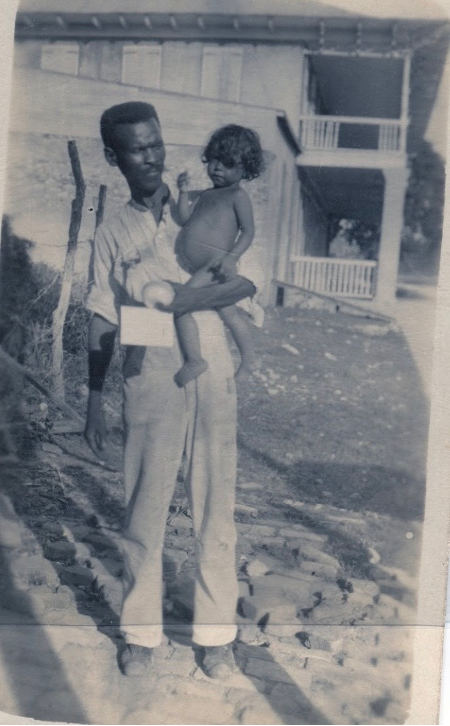
An unused photo collected and stored on a hard drive for potential usage
Courtesy of Alain Martin
Alain: Letting go of judgment is one of the things I've worked on in the last couple of decades of my life. If you hold extreme political views, it's gonna be a problem for us to talk. But I just think that people, unfortunately, are products of their environments. Not everybody has the luxury that you and I do or can just research and read about stuff. This intellectual work is a lot. It demands a lot of time. Most people are stuck working 9 to 5 in jobs that they hate. They don't have time to investigate these matters. I do empathize with that and in the case of Haiti to be a nationalist, to be proud of your country, comes from a place of privilege because you need to have achieved a level of comfort already. Do you see what I'm saying? Like, you could eat three times a day. You have a place to stay. You could still be poor, but certain things have to be met in terms of needs for you to have enough energy to invest in being a nationalist. People in Haiti are so broken down. They don't have time to be proud of their country and to be nationalists. Everybody's trying to escape. Everybody's looking for peace. Everybody wants tranquility. If you go to the countryside of Haiti where the literacy rate is a little lower, they’re not talking about nationalism. They're not talking about the Haitian Revolution. That is something that I take into account, so I'm very compassionate and empathetic to people when they say, “I want to come to the US. I want the US to come and occupy us.” I'm not going to judge a fellow Haitian brother if he's waving an American flag at a celebration. I don't agree with it, but I get it.
Ayanna: You mentioned that your family members are having different reactions. I don't need to break down respectability politics to you and dynamics in the Haitian family, but do you feel like there's someone in your family, maybe, younger than you or an elder…May I call you a black radical? Is that okay?
Alain: Yes. That’s a huge compliment.
Ayanna: Have you spotted the next generation in your family or maybe someone in your family that is questioning their Haitian self?
Alain: That is such an interesting question. Thank you for that question. I don't know, it's the new generation. And the reason I'm saying it's a loaded question, the new generation of my family, are being raised here in the United States of America. How Haitian are they going to be? I will share an anecdote about my son. This is an anecdote that I love just to share with people. We were in Sacramento to visit and there was a homeless person who was asking us for change. Me and my wife, kind of, like, ignore them, because we're trained to. This homeless person [keeps] pestering us. My son said, “Why do you guys keep ignoring him?” We had to explain to him why he's homeless. When we got back to the hotel, he said, “Dad, how can he be homeless? How can he be hungry? Why can't we just give him food and give him clothes?” My wife and I had to explain social inequality and all that stuff. So, he said that when he grows up, he is going to be a mayor and take care of everybody. That just touched me. I just hope that he keeps going in that direction in terms of being a fair person. My cousins that live in Haiti I can tell you they have all given up. Their thinking is, “We don't have time [to have] these discussions [about] Haiti getting better. They're tired. They're just looking for tranquility. They don’t have time for the revolution. They don't have time to critique US imperialism. My brother called me one day and I think the gangs had gone into his neighborhood, so he had to get a line of Molotov cocktails and get ready to defend his house. Do you see what I'm saying? So, he's not thinking about that kind of stuff. He's surviving. Yeah, he's surviving.
Ayanna: Last night I saw a caterpillar turn into a butterfly. It was so special. I'm actually grateful that I saw you at the stage that you were at [with Haitian Studies Association screening] because I got to see your growth and that was truly the best part of the screening. For me, it was even better than seeing the movie. So, I just want to congratulate you. It’s not easy work. I can tell that was not easy.
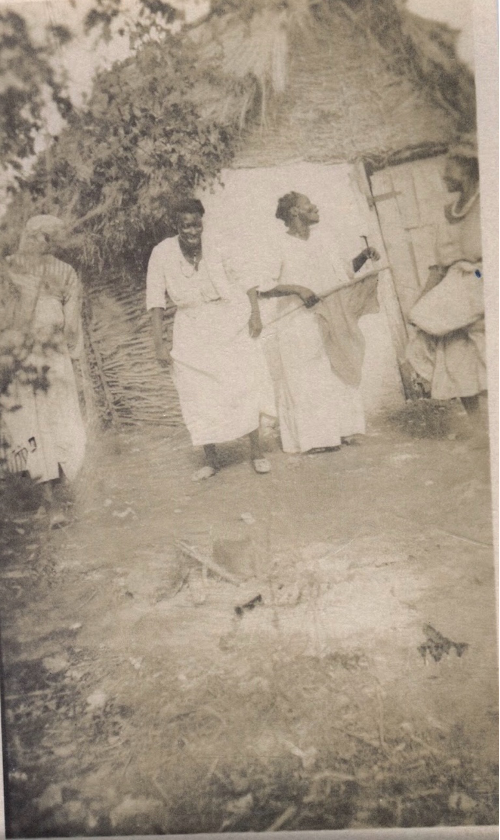
An unused photo collected and stored on a hard drive for potential usage
Courtesy of Alain Martin
Alain: It's not easy, man. We're gonna have a whole conversation about the depression aspect of it, the spiritual aspect of it. You know…You're alone. It's yeah, it's not easy.
Ayanna: Yes, and working on family in such an intimate way, and having to sit and wonder why people make [life] decisions is also not easy. Even as a historian when I was in graduate school, I’d look at people and think, “Wow, you get to be detached from the archive. That must be nice.” Even though you have a team and everyone's processing things differently, for you, it's such a different type of experience. Anytime I cross paths with people that are doing work on the family I feel less lonely. I feel affirmed, but many days I wake up asking myself, “Why am I doing this? There is no revenue in this. There is so much that goes into it…, but then there's so much joy. There's so much joy. I'm sure there are people that were like, “You're doing legacy work!” You’re like [thinking] “Yeah, I mean, I know, but, come on. I'm tired!”
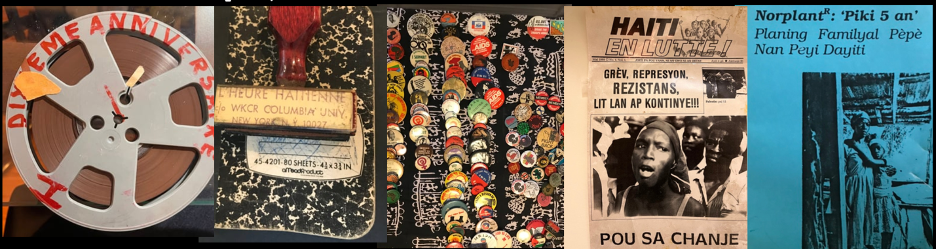
Images of Lè Ayisyen / L’Heure Haïtienne Archive (personal collection of Lionel Legros)
Project preservation by Ayanna Legros. For more information: collection
Alain: Yeah, exactly, exactly. Put money in my pocket.
Ayanna: Haha! I just want to say thank you because you made me feel less alone and [the screening] was a really special moment for me. So, thank you so much. Thank you, thank you. I'm going to share [the film] with other people. I think it's really important for black men to be artists and filmmakers. I think that it's so easy to associate women with doing culture work, but it's really special to see a father do this work. There's so much to be proud of. You got a fan.
Alain: I appreciate that. Like I said, let's keep in touch. Let's do the documentary on your dad.
Ayanna: A documentary has been on my mind for such a long time. I'm ready.
Alain: Okay, have a great day. Take care. Thank you again.

Ayanna Legros is a mixed-media artist, Haitian Studies scholar, and radio preservationist