Maria’s Memories: Congo After Independence
Interview by Ayanna Legros, March 13, 2026
Introduction
“Are you Caribbean?” I slowly lifted my head up from my notepad and caught the warm eyes of Maria Ricardo. Her smile told me that I was safe. “Yes, but how did you know?” She gleefully replied, “I heard it in your voice.” This is not the first time that a person I had never met told me that I “sounded Caribbean”, but Maria’s question and detection felt more profound than usual. Our unplanned exchange became my source of inspiration for this piece.
Maria, like all Caribbean women, was a good storyteller and on that cold dark Harlem night, her stories allowed me to travel to other parts of the world. By the end of the conversation, I asked her, “Where is your book?” She replied, “I have been wanting to write one for years.” At a time when the United States of America’s federal government continues to outlaw intercultural exchange, it is imperative that sojourners like Maria preserve their memories and stories of travel in post-independence Africa, especially in nations with such complicated histories today like Congo. That nation became a nucleus for African Americans and Caribbean diasporic families and their presence helped pollinate Congo’s life post-European colonization through music, concert performance, gastronomy, television, film, and educational schooling.
Throughout our multiple conversations Maria Ricardo shared many chapters of her childhood and teenage years with me including time spent in the Bahamas, US South, Peru, and United Kingdom, but the migration story that stuck out to me was her time in the Congo between 15 – 18 years of age. As I documented her story, I thought about Dr. Regine O. Jackson’s research on Haitian migrants in the Congo and her article “The Failure of Categories: Haitians in the United Nations Organization in the Congo, 1960-64”. Between 1960 and 1975, thousands of Haitian professionals, including teachers, doctors, engineers, emigrated to the Democratic Republic of the Congo to support the newly independent nation’s infrastructure. She states,
“The 1960s was a tumultuous decade in world history, especially across the continent of Africa where almost thirty European colonies were dismantled…and colonial withdrawal opened up new opportunities for African nationalists as well as black expatriates. Activists and radicals from the United States and the Caribbean flocked to postcolonial Africa, along with businessmen and investors seeking to capitalize on promises of development.1”
Unfortunately, research about these communities is scarce, which only motivated me to tell Maria’s three years in the Congo even more. To my surprise Maria’s sister was friends with acclaimed Haitian filmmaker, Raoul Peck, whose family migrated to Congo during the François Duvalier’s regime, so his rich film portrayal of Patrice Lumumba’s life in his film Lumumba released in 2000 makes sense. What made Maria’s story even more interesting to me is her retelling of her own sister’s involvement in Raoul Peck’s 1987 film, Haitian Corner.
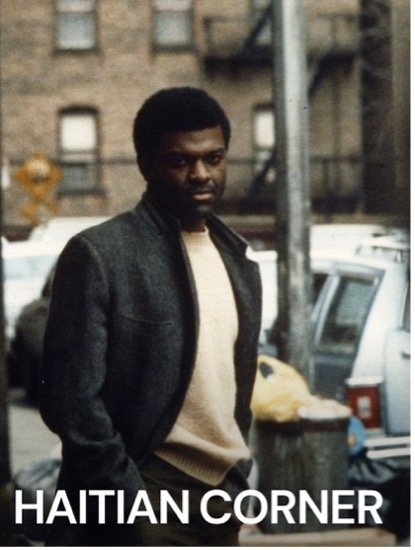
Dir. Raoul Peck, 1987.
By talking to Maria, I learned so much about Congo, a place that is often reduced to death, violence, and disease. As cries for more awareness and media coverage grow louder about the often-neglected lives of families in Congo Sudan, Haiti, and Palestine grow online, it is imperative for us all to track down and document the voices of the Marias of the world.
Girlhood in Harlem
Ayanna: Where were you born?
Maria: I was born in New York City, in Harlem. My sister and I were products of the baby boomers, so you can kind of get a sense of when that might have been.
Ayanna: Do you want to share a little bit more about where in Harlem you grew up?
Maria: I remember being in what they called Colonial Park at 159th Street and 8th Avenue, and that was a small project. I don't remember when it was built, but it was right next door to a baseball stadium. They tore that baseball stadium down sometime in the mid '60s and then the land stood kind of empty and broken down with the remnants of the stadium down for quite a while before they just started to build another housing project on that land. The Colonial Park Houses were about four [buildings], and each was about fourteen floors’ [well] thirteen really because all of them didn't have a thirteenth floor at the time. People in many parts of the United States, maybe the world, were superstitious about the number thirteen, so buildings didn't have a 13th floor. I don't know if I was actually born [when] we lived in those projects. I think my mother was living somewhere in the 120’s in Harlem, probably an apartment that was part of a brownstone or something. When she met my father and they got married I think they lived somewhere around there. I was born at Harlem Hospital. Maybe right before my sister was born they moved to the colonial park houses. She was born at a women's hospital which was part of St. Luke's at the time. It was dedicated to maternal care. She decided that she wanted to come to New York, where her aunt was. Her aunt was already in New York and had a husband. It was an exploratory discovery. She wanted to discover the world. She met my father up here.
Ayanna: Where is your father from?
Maria: My dad was born in New York. His mother was from the Bahamas. Some of her family left the Bahamas and moved to Florida, which was typical of that time, too. They were so close to the United States [like] Cubans. My father never really knew his dad. My dad’s father was from Cuba, and then, my grandmother was from the Bahamas but living in Florida before she moved to New York. My mother's father, it turns out, was from South Carolina, and he was what they called the Gullah (descendants of enslaved Africans from West/Central Africa).
A TEENAGER IN CONGO POST-INDEPENDENCE
Ayanna: How did you get to the Congo? What do you remember?
Maria: When we met our mother at the airport we found out she [got] married while we were away, so we now had a stepfather. Earlier she had divorced my father. She did one of those quickies. It was fashionable at the time for people to go to Mexico City for fast divorces. She took off. We stayed with a family friend of hers and her family, and she went off to Mexico and I guess, enjoyed her independence from my father by traveling outside the United States for the first time. Before that she would send me and my sister in the summertime to the South. Like other people at the time, kids went down south to be with their cousins.
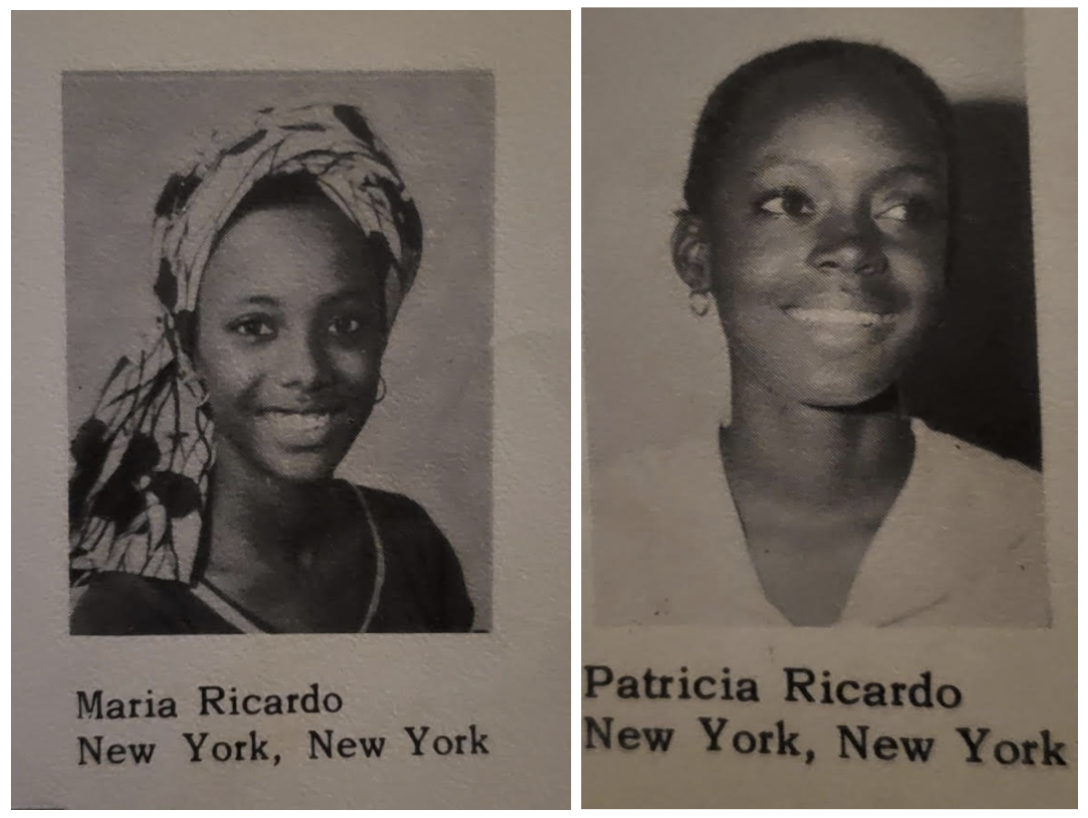
Maria and Patricia’s high school yearbook photos, The American School of Kinshasa
Maria: My sister started school in Kinshasa. She's younger than me. I had also lived in England with her. I did my second year-round in England, and did okay, finished up school, did my O levels, and went on at the end of the year to Congo. I thought I was going to come back again for a third year, but my mother had other plans and decided to put me in school with Patricia. We were in an American school while we were in Kinshasa.
Ayanna: You didn't [have] to speak in French?
Maria: The school was in English. We learned French when we got to Congo. We had to learn French. Lingala was also spoken a lot there, and it is a mixture of languages. I think the school went from being purely a missionary school to becoming an American school that allowed other countries to send their kids there. There were a lot of people from Pakistan; people who were merchants. There were people who were part of the American military and diplomatic corps [and] people who belonged to the embassy, or people who were just there doing their own thing from the United States. There were people coming from other countries like France. They wanted to replace all those professionals that were there [and] those same skills and qualifications coming from countries of people from Africa or people of African descent. We met a lot of Haitians. There were physicians, teachers, and part of the government. So, again, that whole thing about wanting to know more about Africa was so huge for my mom. Once the Africans were getting their independence they were coming this way too. My mom wanted to know more about Europe as well, but Africa was the place [my mom] really wanted to be.
Ayanna: And what are some of your memories from being in the Congo?
Maria: Just being surrounded by all the blackness. We were maturing young women. First loves were definitely over there in Congo. I remember that very strongly. There was a lot of change. I mean, the country seemed like it was really prospering and coming alive those first few years. It was the 1960s, so those first few years of everybody gaining their independence [made] everybody want to move forward. There was, unfortunately, still a lot of fighting going on in the east part of the country and it has never stopped to this day.
Ayanna: When you were there did you identify specifically as a Cuban or as an African American, or both? How did you see yourself? What was the reception of an African American there?
Maria: They seem to be accepted fine. They thought that we were Rwandan. My mother had been there several months before us. She was a go-getter. She got out, met people, talked, learned, and knew a lot of people. She started working for an American school and home tutoring. I stayed in Congo for three years. I stayed after I got out of high school. While I was there, my mother had so many people that wanted tutoring and English education. She taught English as a foreign language through the TOEFL program. She had me take on a few of her clients. My students were a young Jewish-American girl, two from Korea, one from Romania, and two from Tanzania. I loved teaching them. I always was very intrigued by what [the students] were eating. For example, I ate bento boxes with Koreans, and a Tanzanian family invited me to their home to try a snack which were roasted flying ants with a bottle of coke and the dish tasted like bacon.
JOY AND ENTERTAINMENT IN CONGO
Ayanna: What did you do for entertainment?
Maria: Oh, entertainment! We had friends who took us out to clubs or took us to bars where we could drink. Young people were drinking. That's where I learned to drink beer. I would go out with my mother. She had friends who had dinner parties and we went out with her. The school had fairs and special events. My sister and I were in a school play.
Ayanna: Do you mind telling me about your impressions of Mobutu?
Maria: There was always that shadow of the Americans being involved in the demise of Patrice Lumumba. We knew that Mobutu was in the army and became a general or high rank and that he might have been involved in [Lumumba’s] death. We learned all of that from our mother.
Ayanna: What did you eat in the Congo?
Maria: My mother actually learned how to cook a few Congolese dishes. She got very good at making pondu also known as saka-saka which is basically a stew made from cassava leaves. We grew to like that a lot because it reminded us of the southern style collard greens we grew up on. She also made a makayabu dish. Makayabu is cod fish and it is readily available in a dried salted form. She'd prepare that in the Congolese way with various spices, onions, palm oil and lots of pili-pili, an incredibly hot fresh pepper. She also learned how to prepare fufu, [which is] made from cassava flour. It is a sticky grits-like starch stapleshe also learned how to prepare. Rice was more often served for meals in our house. I don't recall eating much fruit other than bananas. A quick snack was often bread with freshpeanut butter and a banana. We could always get that at any of the local marketplaces.
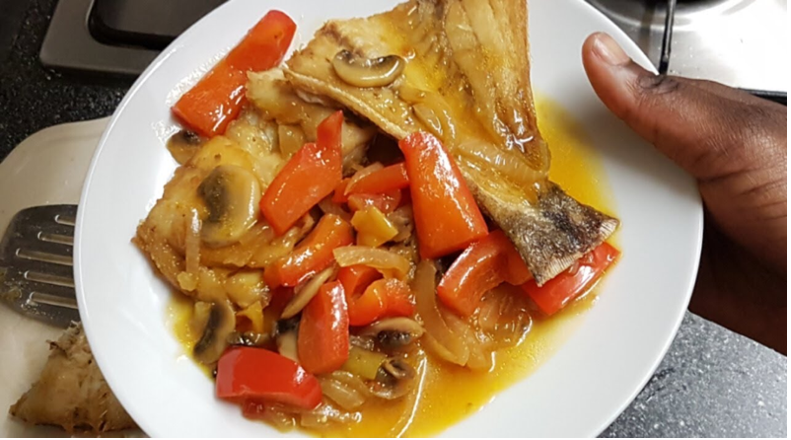
Makayabu (google images)
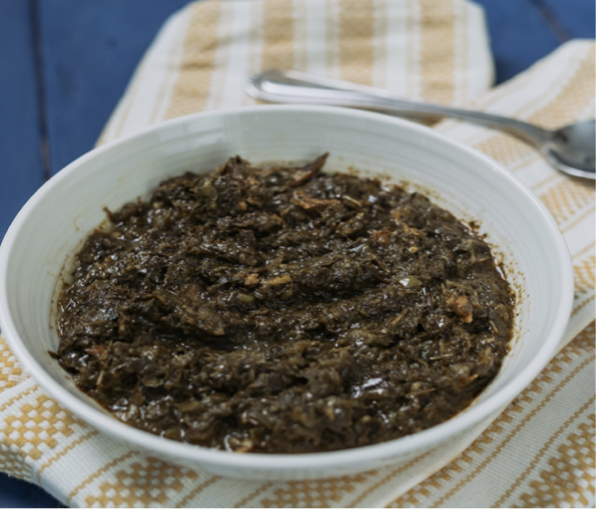
Pondu (google images)
Ayanna: What music did you listen to?
Maria: Of course, soukous music dominated the radio. We learned to love it, and we learned how to dance it. We mainly listened to that.
Ayanna: Did you have a favorite Congolese song while you lived there?
Maria: I can say that I liked the artists Franco Luambo (1938 – 1989) and Tabu Ley Rochereau (1940-2013).
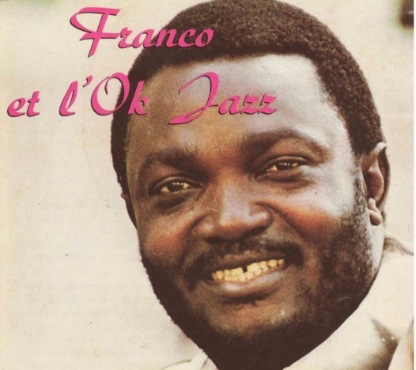
Franco Luambo (google images)
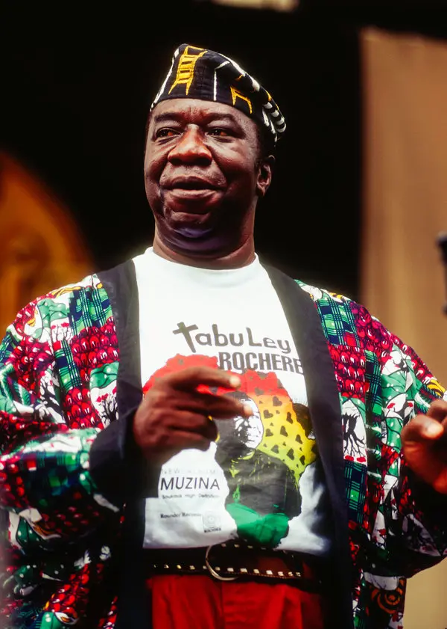
Tabu Ley Rochereau (google images)
Ayanna: What was your favorite memory from your time there?
Maria: There were a few, but one that comes to mind was when James Brown came to Kinshasa to do his first concert. It was special because my mother was his interpreter, and she made sure she got that job because he was from Georgia like my mom. My mom is in the film Soul Power. People associate James Brown’s time in the region with 1974, but he came before that. That was not his first trip. He did a solo concert about three years prior in Kinshasa. We attended the concert and also got to hang with him and his band.
Ayanna: Did you ever listen to news from the USA? If so, what were your thoughts about your homeland?
Maria: We watched some tv, a local transmission, some regional and some international. There were a few Congolese series I got into. I enjoyed the media offered through the USAID library. We were allowed to borrow films and a projector to go with it. These included TV shows and regular movies from the USA and other parts of the world. A favorite show was George Collinet's pop music show and broadcast with Voice of America.
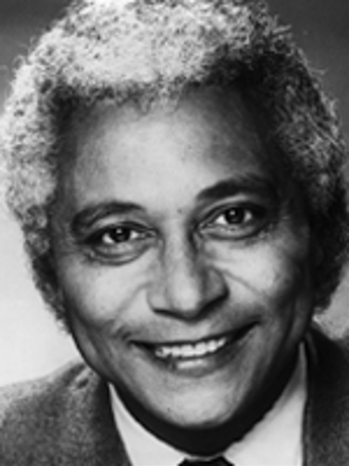
Georges Collinet
George Collinet was a Cameroonian French American celebrity from the Afropop series. With the print media at the USAID library, I was into reading Time, Newsweek, and Look magazines. I was quite disheartened by the fact that the news going out into the world always had negative view of African Americans in big cities. It made me wonder what I would run into once I returned home to New York…
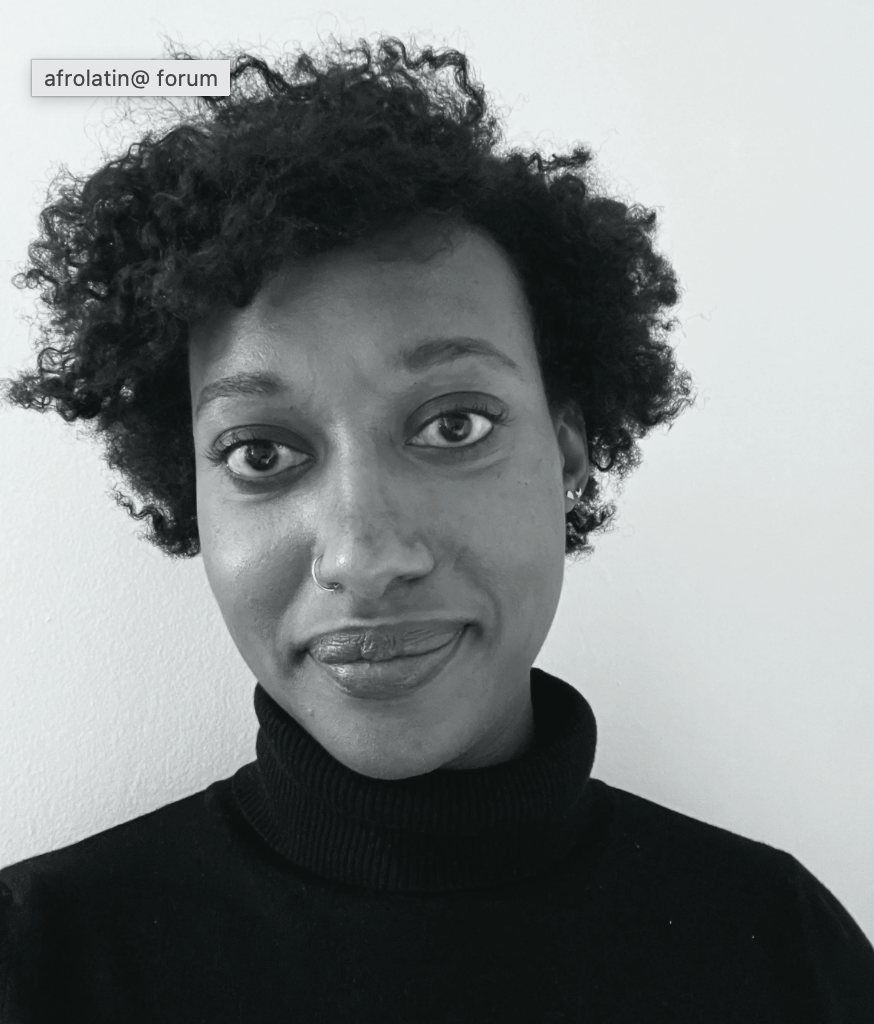
Ayanna Legros is a mixed-media artist, Haitian Studies scholar, and radio preservationist