
Before Hispanic Heritage Month Ends: The Afro-Latino Question Nobody Asked
Originally published in Cartas’ Office Hours, October 13, 2026
by Dr. Aisha Z. Hamilton
The month asks whether Afro-Latinos are included. The better question is who won the independence it celebrates.
Hispanic Heritage Month ends on Thursday. For thirty days, the question the month has asked about people like me (when it has asked at all) is some version of are Afro-Latinos included? Are we in the slideshow, on the panel, in the curriculum?
It’s a fair question, but it’s also the wrong one.
On September 15, I pointed out that this month is built around the independence days of 5 countries across Central America, Mexico, and South America. So the real question isn’t whether Afro-Latinos are included in Hispanic heritage. It’s this: who won the independence this month exists to celebrate?
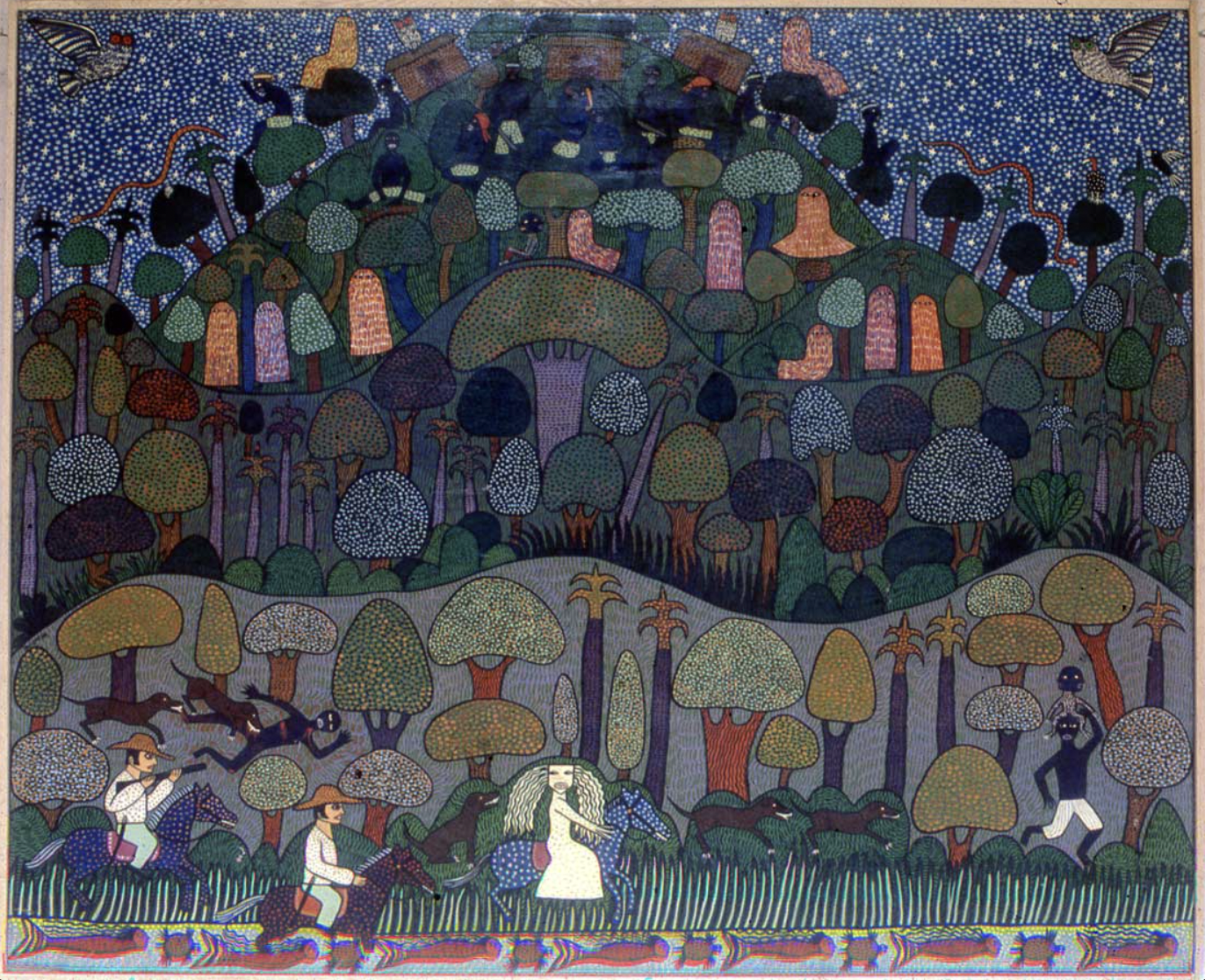
Photo: El Palenque, Manuel Mendive (1976)
When you reframe the question in that way, Blackness stops being a guest at the party…it’s the host.
Three dates to consider
Cuba, October 10, 1868. Last Saturday was the anniversary of the Grito de Yara. At his sugar estate, La Demajagua, near Manzanillo, a planter named Carlos Manuel de Céspedes rang the bell, freed the people he held in slavery, and invited them to fight with him against Spain. That’s how Cuba’s first war of independence begins: with an act of manumission. What followed was thirty years of war, and the army that fought it — the mambises — was majority Black and mulato by the end. Its most famous general, Antonio Maceo, the Bronze Titan, was a free man of color from Santiago. The historian Ada Ferrer has shown in detail that Cuban independence and Cuban antiracism were forged in the same camps, by the same soldiers, and that this is exactly what frightened the white Creole leadership most.
Mexico, the 16th of September, 1810 and after. Among the insurgents who carried Mexican independence through its hardest decade was Vicente Guerrero, a man of African and Indigenous descent from the south. He became president in 1829, and one of the first things he did was abolish slavery nationwide. If you celebrated el Grito last month, you celebrated a war that an Afro-Mexican general finished.
Haiti, 1815–1816, which isn’t on the calendar at all. When Simón Bolívar’s campaign collapsed, he went into exile, and the country that took him in, armed him, and gave him ships and men was Haiti — the first free Black republic in the world, only twelve years old. President Alexandre Pétion asked for one thing in return: that Bolívar free the enslaved in the lands he liberated. Bolívar sailed from Haiti and issued his emancipation decrees in 1816. A great deal of what the month calls Hispanic independence was financed and armed from Port-au-Prince.
So why does the month forget?
Because the elites who wrote the national stories afterward were terrified of exactly what I just described.
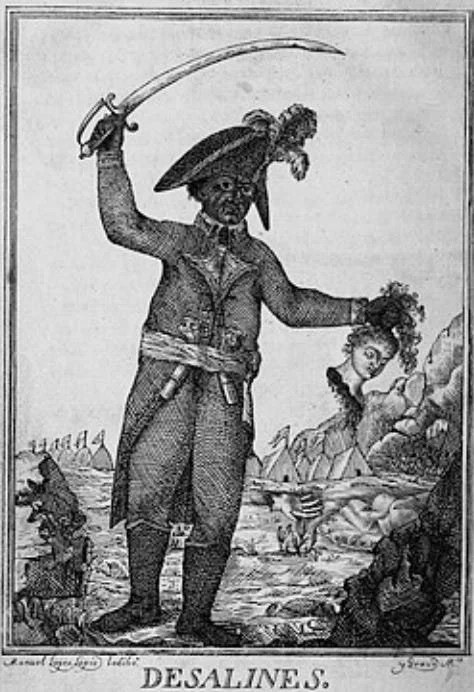
Across the region, the word for that fear was Haiti. Creole leaders needed Black soldiers to win, and then needed them to go home quietly. In Cuba, they spent the independence wars warning that too much Black leadership would turn the island into “another Haiti,” and used that warning to sideline Maceo and men like him. After independence came, the new republics told a story of racial harmony - something like, we fought together, so race is behind us. That story made it systematically difficult for the people who had actually done the fighting to ask for anything. In Cuba, when they organized to ask anyway, the result was the Massacre of 1912, which I wrote about last week.
That’s the mechanism. The month doesn’t leave out Afro-Latinos because nobody knew. It inherited national stories that were deliberately built to turn Black founders into loyal extras.
What changes when you ask the right question
Framing the question as inclusion turns the Afro-Latino narrative into a request of: please add us. But the framework of founding makes us a fact: you can’t tell this story without us, and you never could.
The difference matters beyond the history classroom. When a school, a brand, or an agency plans next September’s Heritage Month, the inclusion question produces an Afro-Latino panel on the last Thursday. The founding question produces a different month, one where Maceo, Guerrero, and Pétion are in the opening slide, because the month is about independence, and they are how independence happened.
So here’s my ask for the last three days of the month. Take one independence story you already know and ask who fought in it, who paid for it, and who was promised something in exchange. Then look up whether they got it.
I’ll say the thing I said on September 22 one more time, because it’s still true: this month is worth celebrating. It’s also worth asking what it’s celebrating.
— Aisha
If you work somewhere that’s already planning next year’s Hispanic Heritage Month content, forward this to whoever’s in charge of the slide deck. I give talks. September comes fast.
P.S. If you want to go further, dive into Ada Ferrer, Insurgent Cuba: Race, Nation, and Revolution, 1868–1898 (UNC Press, 1999), for the independence army. Her recent book, Cuba: An American History (Scribner, 2021), is also well worth the read if you want the whole sweep in one very readable book. Also, check out Marixa Lasso’s, Myths of Harmony: Race and Republicanism during the Age of Revolution, Colombia 1795–1831 (Pittsburgh, 2007), for more on how the “racial harmony” story got built in the first place.
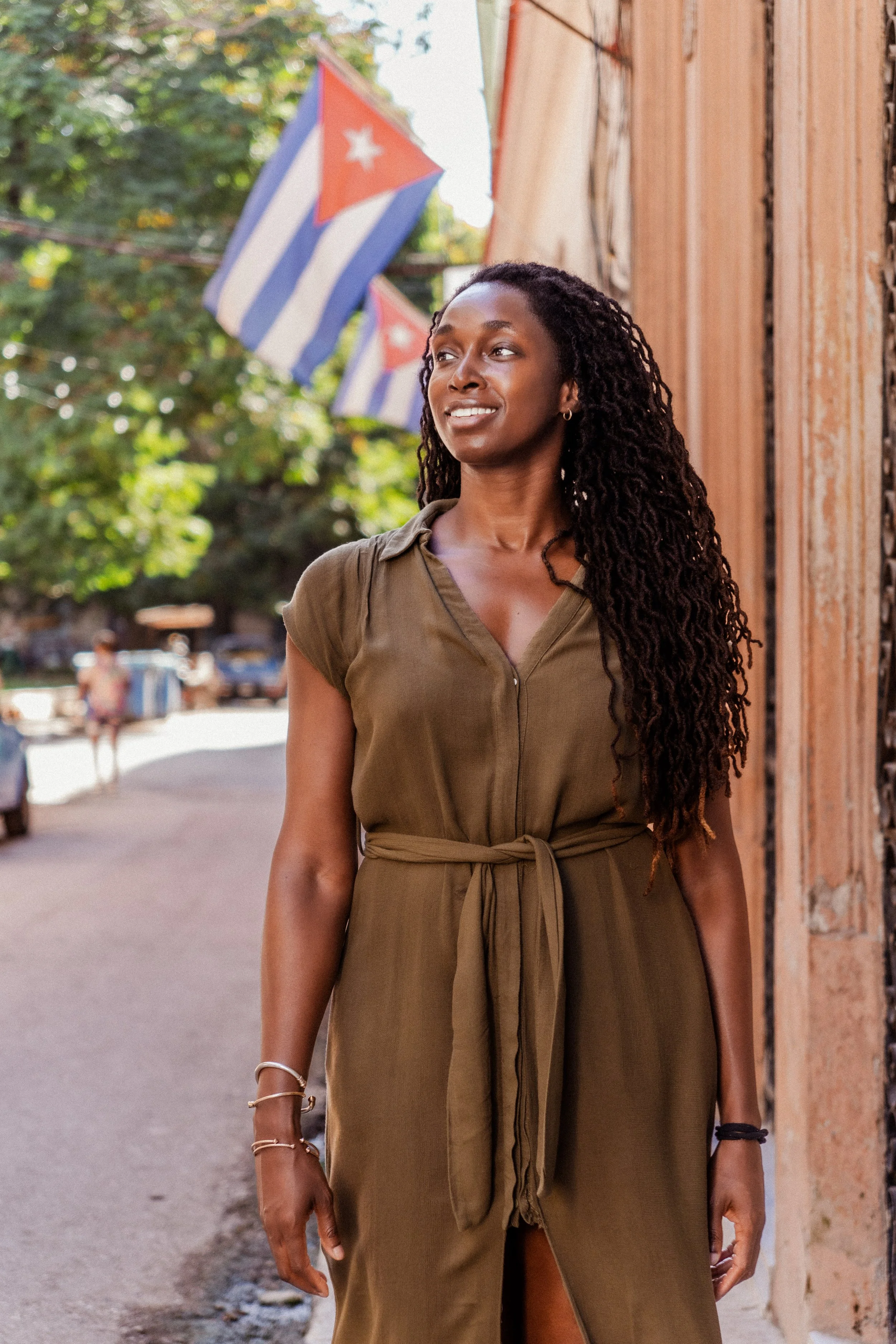
Dr. Aisha Z. Hamilton is a scholar of Afro-Latin American + Afro-Latinx culture and politics and an assistant professor of Afro-Latinx Issues & Social Movements at Bucknell University. A Black Cuban-Guyanese-American writer and public intellectual, she is the founder of VIVA LA LENGUA® and VELA NEGRA, and has spent thirty years traveling between the United States and Cuba. Her work has appeared in The Afro-Hispanic Review, Small Axe, and Black Camera. She advises organizations on Afro-Latin American communities, markets, and policy. Her forthcoming monograph, Representing Race in Revolutionary Race: Afrocubanía, Negrometraje, and Cultural Production, 1961-1996 (SUNY Press) is a theory of Afro-Cuban cultural survival, migration, narration, and institutional negotiation under revolutionary modernity…Cartas is her public writing platform.