Knowledge in the Service of Freedom: Dr. Johanna Fernandez and Intellectual Marronage
On the morning of July 31st, an early text message delivered news we struggled to process: Dr. Johanna Fernández had passed away. With no public announcements or confirmation from close colleagues, we reached out to trusted friends, holding on to the hope that it was all a mistake. Within hours, however, it was confirmed. Dr. Fernández had passed after a private battle with cancer, a loss that struck a deeply personal chord for us, as our founder, Miriam, also lost her life to cancer.
Dr. Fernández was a fierce abolitionist who believed deeply in the inherent power of student activism. She insisted that conversations around Afro-Latinidad remain firmly rooted in the Black Radical Tradition, a conviction she shared with Miriam, who was interviewed a few times by Dr. Fernández multiple times for her personal archives and research. Following the launch of our "Latino is Not a Race" campaign, which united Afro-Latinx organizations across the nation, Dr. Fernández invited us onto her radio show. She generously opened her archives to us, including recorded conversations with Miriam reflecting on East Harlem, the Young Lords, Blackness, the Black Arts Movement, and so much more and said we could use what we needed.
As a scholar, educator, curator, and broadcaster, Dr. Fernández was a truly germinal¹ figure whose impact cannot be overstated. Her commitment to movement work was demonstrated not just in her intellect, but in her character. When she joined us alongside longtime collaborators Felipe Luciano and Jamal Joseph for our "Revolutionary Blackness" panel, she refused her honorarium, texting us to request that the funds be redirected to someone in greater financial need.
In this tribute, Manuel Méndez offers his reflections on Dr. Fernández’s extraordinary life, her legacy, and what he calls her intellectual maroonage. We hope this piece offers a meaningful look into the remarkable spirit and scholarship of Dr. Johanna Fernández.
¹ Miriam often employed the term "germinal" as a deliberate feminist intervention, consciously choosing an alternative to the traditionally male-associated "seminal" to emphasize profound influence. This reflects broader sociolinguistic strategies for gendered language reform; for example, Penelope Eckert and Sally McConnell-Ginet, Language and Gender (Cambridge: Cambridge University Press, 2003), 217, suggest utilizing terms such as "germinal" or "generative" as intentional alternatives for describing the productive nature of language and the social construction of meaning.
Originally published in Project STAND Archives
by Manuel Duran Mendez
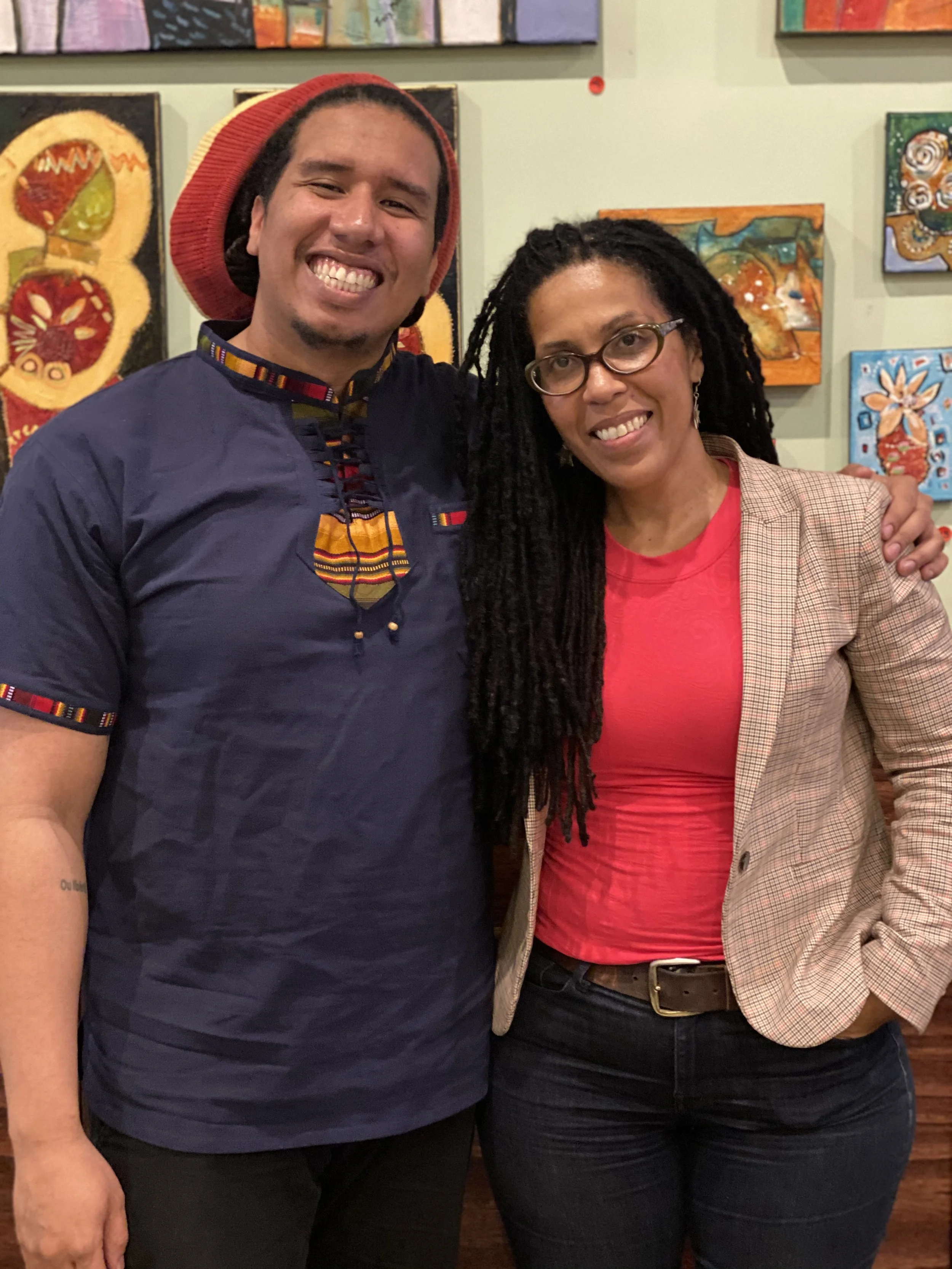
Dr. Johanna Fernandez was an esteemed historian and abolitionist whose scholarship recovers the intellectual, political, and community history of the Young Lords. She authored The Young Lords: A Radical History, edited Writing on The Wall: Selected Prison Writing of Mumia Abu-Jamal, and co-edited The Roots of Mass Incarceration in the US: Locking Up Black Dissidents and Punishing the Poor with Mumia Abu-Jamal. She taught on social movements, researched, litigated, and uncovered primary documents that led to recovered police surveillance records, including those involving Malcolm X.
Dr. Fernandez did not simply study "cimarronaje intelectual” (intellectual marronage); she fully embodied it. I had three opportunities to work with Dr. Fernandez: the Caras Lindas Podcast interview for the release of The Young Lords: A Radical History; curating the Latinx Freedom exhibition in Washington, D.C.; and, finally, during our own Project STAND freedom nights. On all these occasions, Dr. Fernandez gave her time and knowledge freely and generously. This post is a tribute to our friend and colleague, Dr. Johanna Fernandez, and an example of how radical intellectual endeavors are carried out through activism, scholarly work, community archives, and acts of kindness.
Cimarronaje (marronage), the Spanish term historically associated with the dispossessed Seminole tribe in Florida, refers both to escaped enslaved Africans and to domestic animals gone wild. In the Americas, enslaved Africans who escaped the brutality of fields of slavery created autonomous communities from Brazil and the Caribbean to the United States. Urban marronage emerged as conductors and routes of the Underground Railroad, creating spaces of safety. Some may describe this process as intellectual warfare: cimarronaje intelectual/intellectual marronage is the creation, recovery, and circulation of knowledge beyond structures that marginalize Black and Indigenous bodies. Lae’l Hughes-Watkins, Project STAND founder, calls it “reparative freedom": a radical imagination that lets us build, create, and envision the impossible even within an oppressive system. Dr. Fernandez embodied intellectual marronage through her research, writing, knowledge sharing and transfer, relationship building, and community memory work. Some scholars observe freedom movements. Others, like Dr. Fernandez, let the ethics of those movements shape how they move through the world.
The Young Lords also exemplify cimarronaje intelectual. In 1968, the vibrant streets of Chicago became the birthplace of the Young Lords, a revolutionary group ignited by the passion of their leader, Cha Cha Jimenez. Just a year later, their influence surged as they established the New York chapter, expanding their vision for justice and equality into a new urban landscape. The Young Lords understood the mission of their time and worked to birth a national Patients’ Bill of Rights, free breakfast programs for children, and community health clinics and to fight lead paint poisoning and tuberculosis. Like the Black Panther Party, the Young Lords were part of the Black radical traditions that challenged the institutions that failed Black and Brown communities. Dr. Fernandez’s scholarship on their movement moved beyond the ivory towers of armchair intellectuals. Through her co-edited work with Mumia Abu-Jamal and The Young Lords, Dr. Fernandez returned this history to the communities from which it emerged.
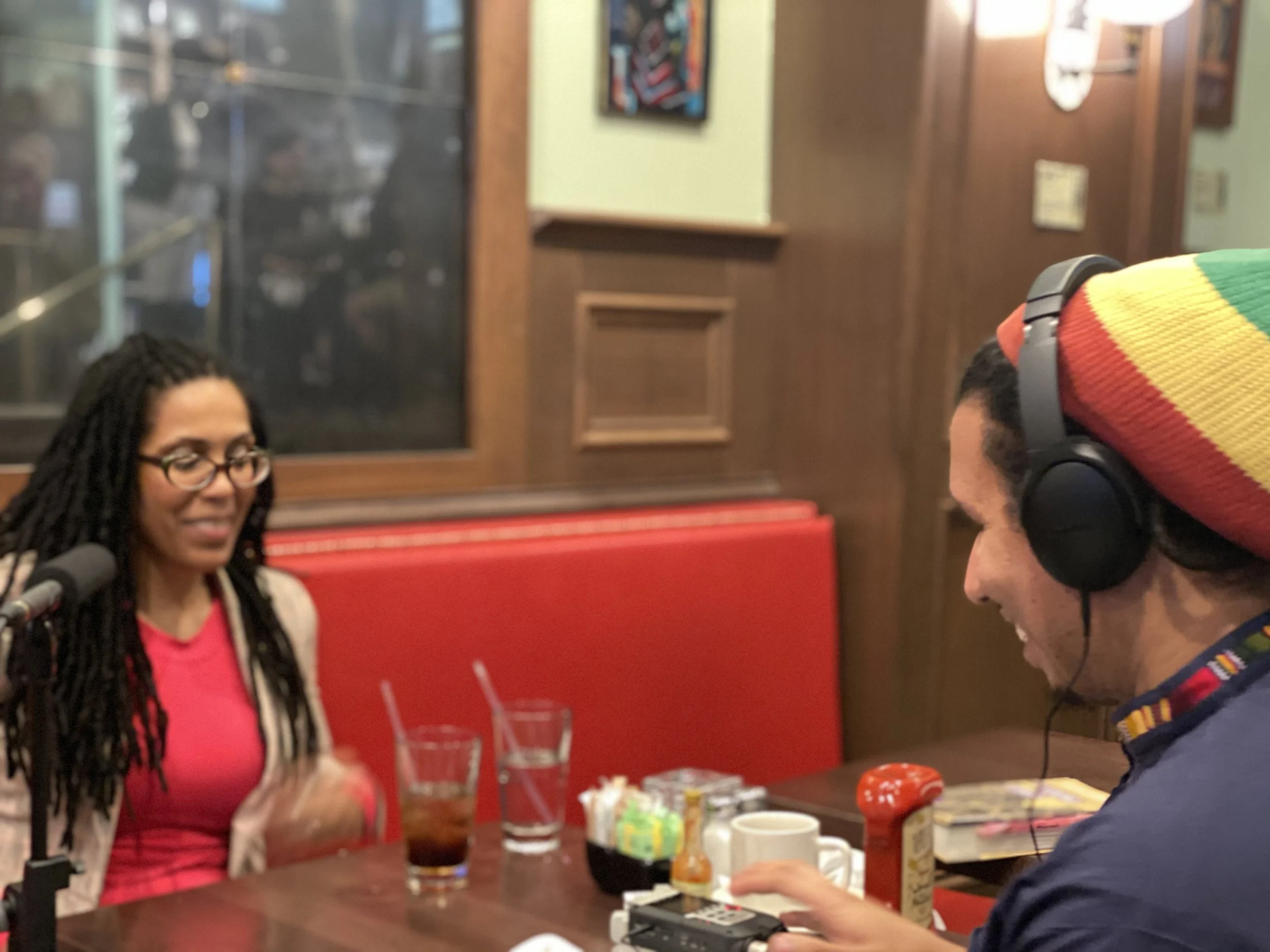
In 2017, I started the Caras Lindas Podcast as a rebellion against mainstream Latinidad media and in response to many images in Latino media today that represent our community in offensive and derogatory ways. Caras Lindas aimed to shed light on and reclaim our stories. We wanted a space for the Black Latinx community to share their achievements and unique experiences. Netfa Freeman, organizer of Pan-African Community Action (PACA), contacted me about the opportunity to interview Dr. Fernandez on her newly released book about the Young Lords. I couldn't believe it, but to our great surprise, our podcast team interviewed Dr. Fernandez at the K Street Busboys and Poets. There, I learned about Dr. Fernandez's practice of radical accessibility: her willingness to share her time, explain the history of young people fighting back, take our questions seriously, and explain everything without worrying about the clock. We were fortunate and grateful to learn about her origins as a Black Dominican and how she became involved in the Young Lords through her thesis research. While some academics hoard and gatekeep knowledge, Dr. Fernandez’s practice of intellectual marronage refused to let academic structures determine who participates in and contributes to knowledge.
Dr. Fernandez also participated in Project STAND Freedom Nights, which highlighted the Young Lords' student activism, and which I helped organize. The Freedom Nights event aimed to inspire new generations of activists while challenging attempts to erase radical histories, as Dr. Fernandez did throughout her career. In early July 2025, I texted her to request an October date, and she readily agreed to both that and to coming to Washington, D.C. She wanted our community and student activists to know this history, which exemplified her generosity. She showed us that a scholar's role is to enter a community space not as an authority, but as a participant in collective knowledge-making. Attendees were inspired by hearing about her life's work in resistance, memory, and the ongoing fight for justice.
I was also privileged to work with Dr. Fernandez on the Latinx Freedom Exhibition project. This project (now postponed) began with an exhibit on Latino civil rights history by Dr. Fernandez and Dr. Felipe Hinojosa. Latino civil rights history is not well known. Popular knowledge is often limited to the Young Lords, the 1968 walkouts of Latino students protesting discrimination in schools, Mendez v. Westminster, which played a key role in the desegregation of Brown vs. Board of Education, and current undocumented and environmental movements in our communities. Dr. Fernandez’s legacy lives on as her work strengthens the reparative archiving framework that seeks wholeness from fragmentation, mitigates harm, and centers the voices of those most marginalized and underrepresented. Archivists have historically determined whose lives enter institutional memory, and reparative exhibitions intervene by bringing suppressed histories back into public view.
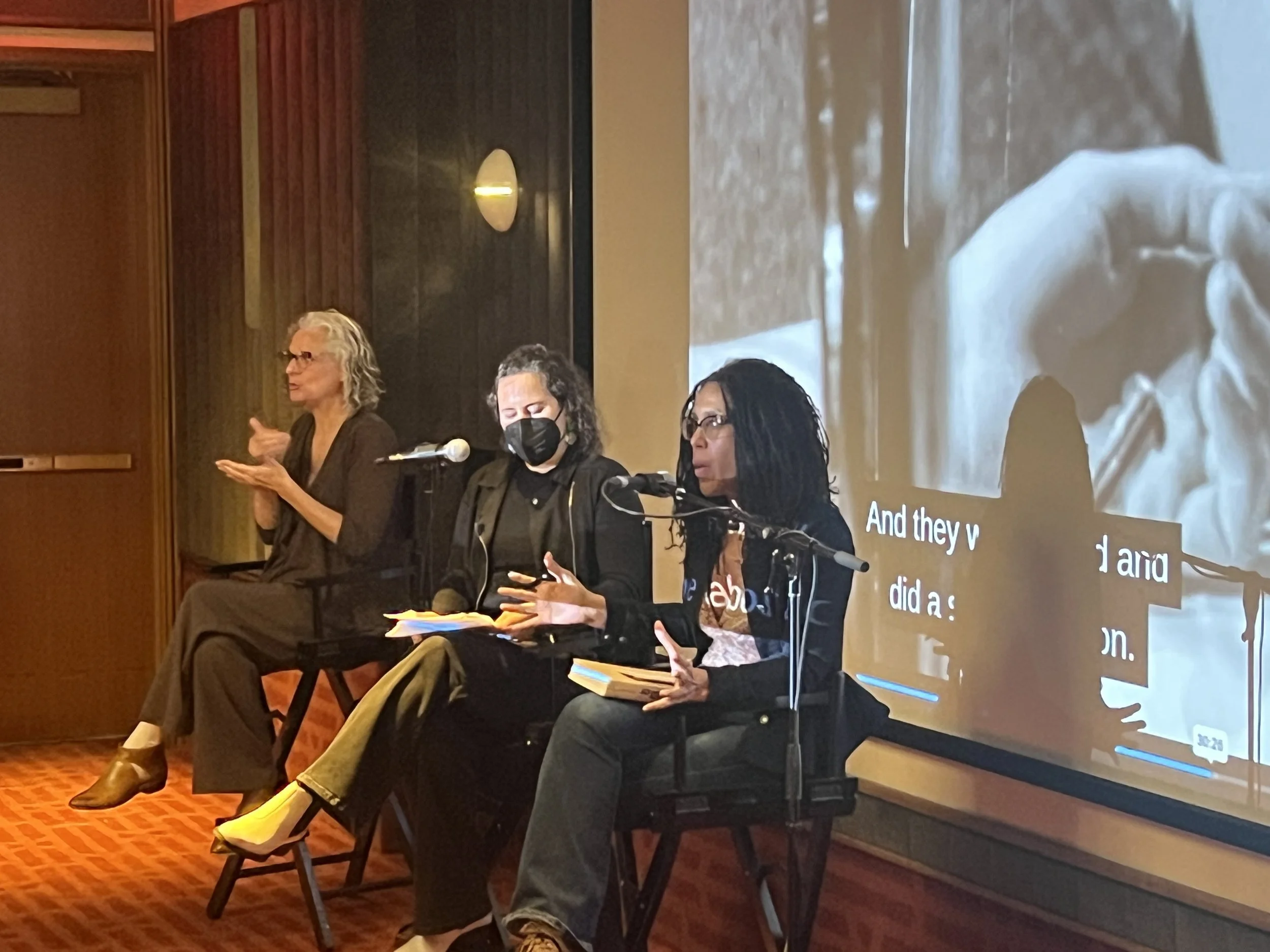
The Latinx Freedom Exhibition project highlights five cities with prominent Latinx histories: New York, Chicago, Los Angeles, Houston, and Washington, D.C. Kristy La Puma and I are co-curating the D.C. Latino Freedom Exhibition, which centers understudied Latinx communities. D.C. Latinx communities have long-established histories of neighborhood organizing and international solidarity movements. However, these legacies are silenced and dismissed in favor of the federal government narrative of D.C. Dr. Fernandez envisioned the exhibition downtown, where foot traffic is heavy, but the current political conditions and the threat of a federal takeover of the capital city, along with our community members being picked up from the street, were barriers to this goal. Our team embraced Dr. Fernandez’s vision, but challenges with the current federal administration and other factors have sadly led to the delay of this project in Washington, D.C.
Across the Caras Lindas Podcast, Project STAND Freedom Nights, and the Latinx Freedom project, it was clear that Dr. Fernandez’s intellectual marronage stemmed from her willingness to recover histories marginalized by dominant narratives, make scholarship accessible beyond academia, treat knowledge as something created through collaboration and relationships, and circulate, not gatekeep, her resources. A scholar may write about revolution without practicing revolutionary intellectual relationships, but intellectual marronage concerns both what we know and how we choose to share it. Dr. Fernandez consistently demonstrated that practice: showing up, sharing what she knew, and understanding that knowledge becomes most powerful when it moves. We honor Dr. Johanna Fernandez's legacy by documenting the voices, stories, and actions of vibrant communities that have faced systemic neglect and are fighting to ensure the knowledge never stops moving.
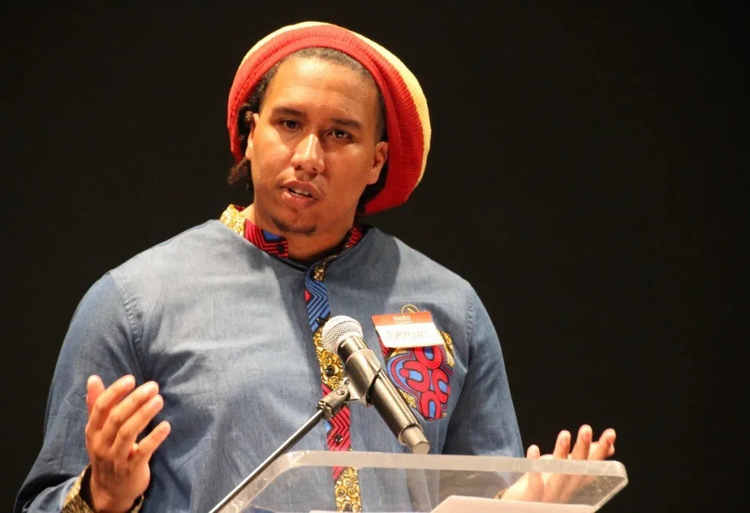
Manuel Duran Mendez is a researcher and information professional whose scholarship examines archives, librarianship, and preservation as contested sites of cultural memory, epistemic power, and social justice. Grounded in Library and Information Science, archival studies, and Black information science, his research investigates how collection development, cataloging, metadata, digitization, oral history, and community engagement shape understandings of race, migration, identity, and historical belonging. Central to his work is the question of how archival practices can either reproduce historical exclusions or function as reparative interventions that recover and sustain marginalized histories.
His research centers Black diasporic and Afro-Latino histories, particularly in Washington, D.C., and the broader DMV region. Through initiatives including the DC Afro-Latine Project, AfroLatinx: The Washington, D.C. Experience, and World Travelers: Black Immigrants in Washington, D.C., he employs oral history, participatory archiving, and community-centered documentation to address archival silences and preserve histories often absent from institutional repositories. His multimedia projects—including Las Caras Lindas Podcast, Negrometraje, and Cuentos de Covid—further explore podcasting and oral storytelling as technologies of community memory.
Mendez’s professional practice includes audiovisual digitization, digital preservation, metadata creation, archival appraisal, and reparative community archiving. His work with Project STAND, DC AfroLatino Caucus, Sirius XM, and Trinity Washington University has strengthened his engagement with the preservation of culturally significant media, student activism, and institutional memory. Collectively, his scholarship advances reparative librarianship, radical access, community empowerment, and epistemic justice while centering memory institutions' ethical responsibility to preserve histories long neglected, fragmented, or erased.