
Legacy: What Miriam Jiménez Román Taught Me About Race & Afro-Latinx Studies
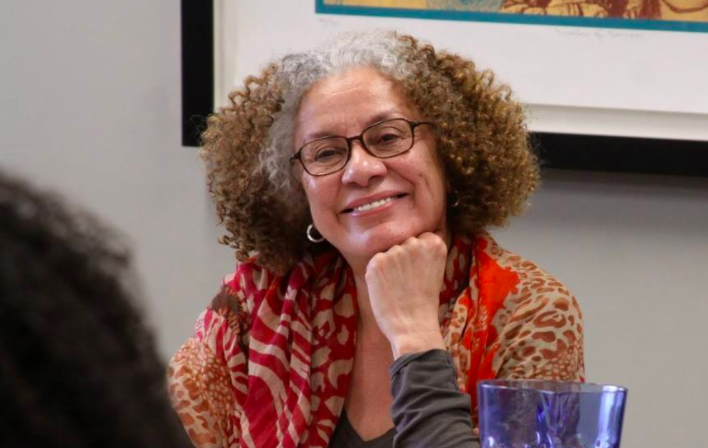
This post was originally published by Natasha Alford on her website NatashaSAlford.com it is republished here with her permission
Introduction by Natasha S. Alford
I was connected with Miriam Jiménez Román in May 2020 as part of my “Afro-Latinx Revolution: Puerto Rico” documentary project, but her book The Afro-Latin@ Reader sat on my shelf much longer. Those who know the pioneering scholar and activist’s work (recently profiled in The New Yorker) understand the significance of her book published in 2010, just a couple years after I graduated college. I had always been hungry for scholarship like hers and the centering of Blackness in Latino studies.
In response to my interview request, Miriam agreed, modestly noting that she was managing some health issues but would absolutely speak with me. What she didn’t mention was that she was battling cancer. In spite of all she’d already done to make an impact in Afro-Latinx studies and the preciousness of her time, she made it a priority to give more of herself.
When I learned that Miriam passed away months later, I was stunned and saddened. I was also heartened and would go back and read our interview transcript often in the process of producing the “Afro-Latinx Revolution” documentary. We talked about a range of topics under the umbrella of Afro-Latinidad, some of which was included in the film, but I knew I would eventually want to share our full discussion.
As we approach a year since our impactful meeting, I offer the transcript for reflection, especially as conversations about race and anti-racism only intensify. Most importantly, I am reminded how the power of generosity to others— saying yes to a simple request— creates a legacy that lasts far beyond one’s final days on earth.
RECORDED JUNE 2020
Natasha S. Alford: So, Miriam, just to start, if you could please state your name and title.
Miriam Jiménez Román: My name is Miriam Jiménez Román. I am the executive director of the Afro-Latina or Afro-Latino Forum. I guess that's about it.
Natasha S. Alford: Great. And this is a total side note. But my abuela, her last name is Roman.
Miriam Jiménez Román: Oh really? What part of the island? [laughs].
Natasha S. Alford: She's from Bayamón. And then they moved to the Bronx in the late 50s.
Miriam Jiménez Román: That guy got around.
Natasha S. Alford: Right? Seriously. (laughs) So we were talking about the marked difference between the reception to even the word, Afro-Latinx or Afro-Latino. Can you talk about why there is a difference in perception between the mainland and then on the island of Puerto Rico?
Miriam Jiménez Román: I even find problematic the use of “mainland.” But I would prefer to talk about the issues here in the United States. The experience in Puerto Rico more directly relates— it can be compared to Latin America and the Caribbean to a large extent because Puerto Rico has always preferred to identify with Latin America more even than the Caribbean.
The identification with the Caribbean is much more recent and that has everything to do with race. You know, a lot of the structural and systemic issues that we are constantly referring to play themselves out in the way we think about things like race and class and everything else. So those people who were in a position to really talk about any of these issues and have a voice, a public voice, tended to be of the upper class. And those tended to be white. They tended to be part of a literary and intellectual elite that was more connected to Latin America than to the Caribbean. So, it's perfectly natural, logical that this is what happens. But it plays itself out in the way race is talked about, constructed, and discussed on the island.
So most of what's the discussion in Puerto Rico tends to be somewhat elitist, comes from a very white optic--is very conciliatory in the sense that, the traditional way of talking about race in Latin America has been to not rock the boat too much, to use your friendships with those in power to advance your agenda, even if it's an agenda that's not necessarily to their benefit. But it hasn't been as in your face, I put it that way, as it has within the United States. We have been much more assertive, much more aggressive. When I say “we” I’m talking about Puerto Ricans specifically, about how we talk about race and class in this country than in Puerto Rico.
Part of this has to do also with the racism against Puerto Ricans here in the United States. So those who came to the United States tended to be of the working class, people who were looked down upon as not as educated. And they weren’t. The ones who ended up in the factory jobs who ended up in the so-called ghettos. And so, all these negative things that one could talk about when one talked about Puerto Ricans were attributed to those in the States. If the world saw Puerto Ricans in a negative light, it was because we here in the United States were, you know, crime-infested, aggressive, uneducated, all the negatives that you could think of that are usually associated with Blackness and poverty.
So, we got it from both ends; we got it from the island elite and we also got it from the United States elite. As a result, we were raised very aggressive. So, the movements that came up in the 60s, were much more connected and connected us to what was going on in this country more generally.
For example, I am of the Brown vs. Board of Education generation. I say that proudly. I grew up in a Jim Crow North. I grew up in segregated schools. I was bussed out of my neighborhood in Harlem to the Upper East Side. I received my first scholarship, it was a Martin Luther King scholarship to the University of Vermont, of all places.
So, my own personal trajectory for political education has been more linked to the African American experience than to the experience of Puerto Ricans on the island, who for the most part, came from a completely different class and racial background. And that's caused many difficulties over the years. Not just in terms of race and class, it’s about sort of everything.
Natasha S. Alford: Thank you for sharing as well on the personal side. I wanted to ask just about the shift that we are seeing. And it's fine if you again, if you're not as comfortable or you don't want to address the island right now, but the women that I met on the island from Colectivo Ilé, they say that they're Afro Puerto Rican and they're creating media, podcasts, and magazines, and advancing this idea that this is a good thing to embrace the term both personally and for political reasons. Can you offer an opinion about what is leading to more people embracing that?
Miriam Jiménez Román: Well, like I said, the position on the island has always been much more conciliatory… So, to say that we are all Afro-descendiente is to basically say nothing. Everybody on the freaking planet is Afro-descendiente. We all come from Eve. You’re not saying anything new. You're not saying anything that's going to make any fundamental political difference in the way people are situated in their socio-economic lived experience. So Afro-Hispanic, Afro-descendiente, eso no dice nada. It’s partly being conciliatory. You know, “we are all one,” but we are not all one.
The real issue today is an anti-racist struggle, which means that those who are not white are discriminated against. And how are we discriminated against? You have to show statistically. And this is… each issue with the census: You have to demonstrate statistically how it is that we are unequal. You can't do that if everybody is the same. There's no way you can, you can count the difference between people who are actually Black, who wear blackness on their skin every day, and those who walk around blue-eyed and light-skinned. What does that really do to change the situation in Puerto Rico today in terms of race? It does nothing. It does not challenge the patterns that we see every day in Puerto Rico.
Natasha S. Alford: Can we dig into that more because it sounds like this is a policy issue that you're raising, beyond the cultural expressions. So that's like the census campaign people have been talking about. But then also, how are you challenging policy to address the disparities? For example, health disparities between darker-skinned Puerto Ricans and lighter-skinned.
Miriam Jiménez Román: Exactly right. Yeah. How are they going to challenge that if we're all Afro-descendiente? How well are you going to demonstrate that when I go to the hospital, I'm treated differently from someone who is much lighter-skinned or treated better than someone who is much darker? How do you track that? Well, if they don't even bother it's not an issue. And to me, it is THE issue.
It's the work most of the Afro-Latino Forum has been focused on- demonstrating that, not just among Puerto Ricans but among Latinos generally, there are racial disparities and they cover education, health, everything. There's not one aspect of our lives that's not touched by this. There's a difference between how a Black Puerto Rican looks at what's going on today and Black Lives Matter and the way a white Puerto Rican looks at it.
“There’s a difference between how a Black Puerto Rican looks at what’s going on today and Black Lives Matter and the way a white Puerto Rican looks at it.” — MJR
A white Puerto Rican will still tell you: "Well, if you weren’t so rowdy, you’d get what you want." Where a Black Puerto Rican is just feeling it in their skin. I've been there. I've been stuck. I've felt the consequences of this. And there's where I diverge from any discussion of just focusing on the identity.
Yeah, I like dancing bomba like anybody else and besides that, I love our food. All of that is not to say that I don't give [it] significance or importance in my life. It's just that's not why I work. I work to change things for the better, not to leave things where they are or just to be celebratory two or three times a year. It’s not enough.
Natasha S. Alford: That actually leads into one of the last questions that I had for you. You raised this. This was during the panel, you said that there was a reluctance to use federal anti-discrimination laws on the island… I spoke with a lawyer on the island as well who said, you don't see like an NAACP in Puerto Rico, right? Like, there's not--people for some reason are reluctant. Can you offer some perspective about why?
Miriam Jiménez Román: Absolutely. The pressure is enormous. I lived in Puerto Rico in the 1970s and early 80s and surrounded myself with fairly progressive legal scholars and petitioners. And I even remember cases. There was one in particular of a lawyer who had been discriminated against in a nightclub. She'd not been allowed in with her friends because they said she wasn't appropriately dressed. She was fine. The only thing that was wrong with her dress was she was wearing black skin. There's no way she could take that off.
We were all set to go to court. She was complaining. We sat around with margaritas and plotted out strategy, and what we would do, and who we would call. And about two or three weeks into this, she called up and said she couldn't do it. She couldn't do it because her family had heard about it and they had discouraged her. In no uncertain terms, that it would ruin her career, that it would cast aspersions on the entire family. And she just couldn't do it.
There are at least three other cases I can cite during that same period where it was clear there was discrimination and people pulled back because of mostly family pressure but also professional pressure. No, the use of federal laws is really--it's almost nonexistent. Very few cases have been brought up. More often than not, when they have been brought up it’s because people are being discriminated against as Puerto Ricans, not because of race as such.
Right now, there’s a case of a young Black girl. It’s about to go to court for reasons nobody quite understands. It’s a kid who was abused, beat for months by her fellow students to the point where she finally got pissed off and pushed somebody. But she's being taken to court for assault, even though she was the victim of abuse, physical and verbal abuse for months. Este... And I don't even see anybody organizing around her defense at all. She’s doing this on her own.
Natasha S. Alford: I remember that case. I didn't realize that it's still going to court. Is it Alma Cruz?
Miriam Jiménez Román: Yeah.
Natasha S. Alford: Looking at the future, you know, in your ideal world, you talked about the work that you're doing--that you're doing here. Just what does it look like? Again, beyond the kind of cultural identity conversation. Is it organization? Is it, you know, lobbying, protesting? I saw that in Loíza they did a demonstration for George Floyd.
Miriam Jiménez Román: It takes all of it. There are aspects of Afro-latinidad that did not develop the way I would have gone. There's a very strong commercial aspect to this, where, you know, entrepreneurial basically is the way people have interpreted it. And you know? That's fine. Yeah. It's there you go with it.
My own focus, my own interest is racial justice and anything that brings that about in any area is good with me. Within academia, which means courses that bring up the fact that there is racial discrimination among Latinos. If the faculty that gets hired are Black Latinos so that when we talk about race and ethnicity among Latinos, there are Black people there doing the talking. It's not just some white person analyzing us and then regurgitating what we say. But that we ourselves have voices in those arenas. We tend not to have that.
A lot of Latinos and especially white Puerto Ricans, have become experts on race and ethnicity. And they take our voice. They're the ones you see are on all the panels and it can get really annoying after a while because, first of all, they're not even accurate. But second of all, why go to the second source when you can go directly to the primary source? Careers are made and broken over these kinds of things, so it has larger ramifications than just being on that one panel. Este…
“A lot of Latinos and especially white Puerto Ricans, have become experts on race and ethnicity. And they take our voice.” — MJR
It also means, for example, the publication of books that educate people about these facts. You know, the Reader was able to present much more research and many more publications. That is really exciting for me. It’s now going into its tenth anniversary. And the most interesting thing, for me, has been to see the number of people who were encouraged by the Reader to produce their own work. At all levels of literary work and academic work, that's the greatest gift for me, to see that. That it didn't just stop there, that it created a movement in a way that continues. And hopefully, we'll end up bringing the racial justice we all deserve.
Natasha S. Alford: I thank you for the work. I'm sad because when I was a senior in college, I was writing a thesis about La Sista, a reggaetonera from Loíza. And I couldn’t find anything. It was just so hard. So now it's like, we have that. And I apologize for using “mainland” in that way. What happened was that I was criticized for saying it the other way. I did an appearance and they were saying that by saying “United States” and “Puerto Rico,” I was making it seem as if PR was completely separate. So, I got criticism for that.
Miriam Jiménez Román: Well, I mean, it is. It’s a colony of the United States. A lot is also based on anti-imperialist discourse. To me, it's an incomplete analysis, but it is anti-imperialist. They basically are saying that a lot of the terminology: Black, white, etc., is an imposition from the United States and that doesn’t apply to us.
And they're wrong, of course, because these terms actually have been applied to us since Spanish colonialism. So, it’s historically inaccurate. Even though I understand the sentiment behind it, to be anti-imperialist. It’s cool. I'm good with that, but you should be accurate when you do that.
Natasha S. Alford: I'm always happy to learn. So, thank you for pointing that out to me.
Miriam Jiménez Román: No problem. And like I said, it is different. It depends on, where are you sitting, who's sitting next to you, and who's going to jump on [you] for this or the other. It comes with the territory.
Natasha S. Alford: It does. It does. And you just, you know, you take it, and you learn, and you move forward.
This interview has been edited for length and clarity.
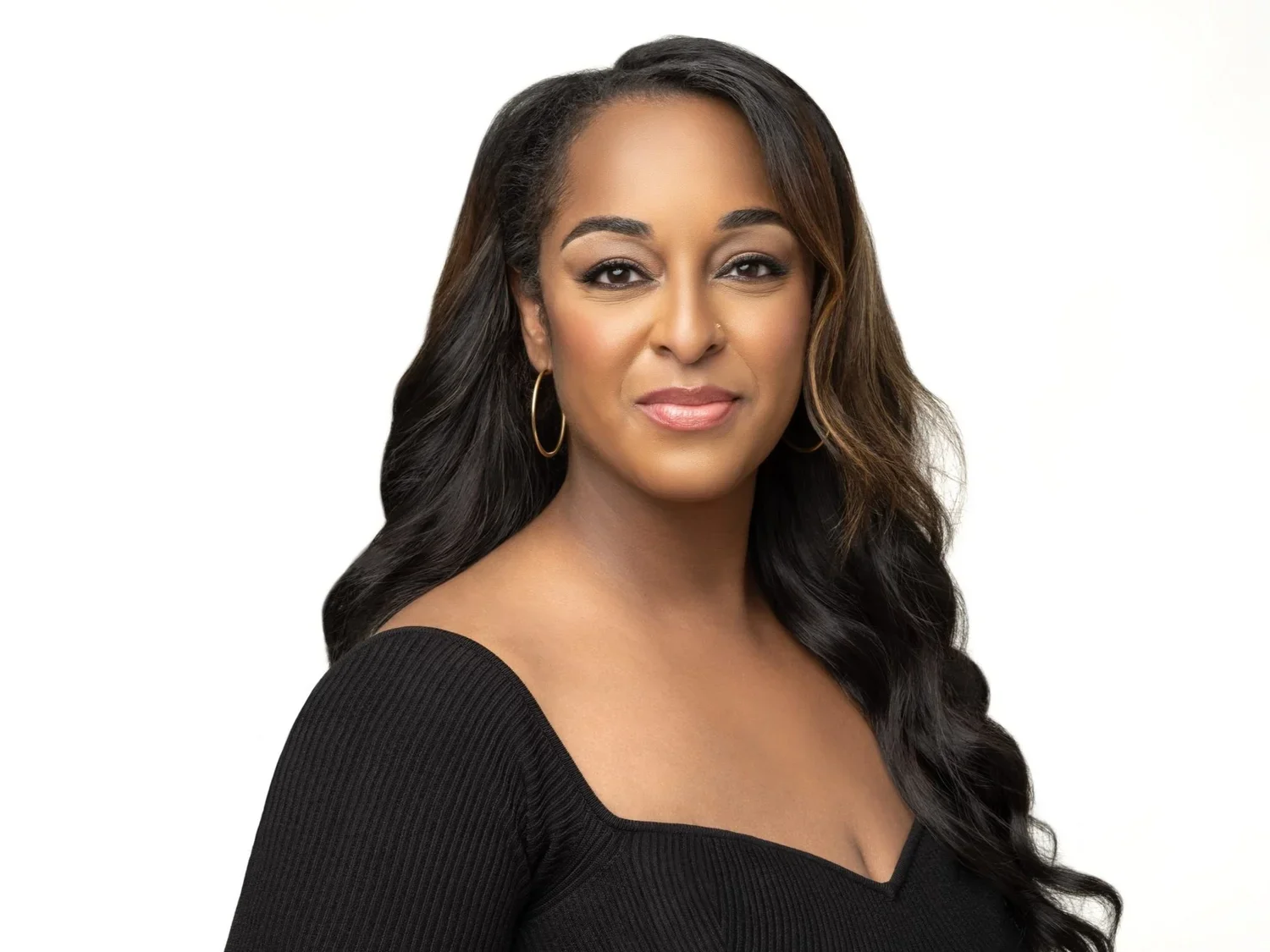
Natasha S. Alford is an award-winning journalist, host, author, and media executive recognized for harnessing the power of storytelling to inspire and educate. Currently serving as Senior Vice President at TheGrio, Natasha leads with a commitment to amplifying overlooked stories and shaping narratives that matter. She is a trusted voice in media, regularly providing insightful commentary on politics, social justice, and culture.
She was selected as a 2019 Pulitzer Center for Crisis Reporting grantee, and used the grant to executive produce the original Amazon Prime Video documentary on the complexities of Afro-Latin identity titled: ‘Afro-Latinx Revolution: Puerto Rico’ (2020).
In 2020, Natasha was awarded a Black Voices for Black Justice grant for her journalism work and announced the formation of a new scholarship to support aspiring journalists of color.
Other honors include being a 2020 Poynter Women’s Leadership Academy graduate, 2019 Maynard 200 Fellow, and a 2017 Harvard Women’s Leadership Award recipient.
Alford's TEDx talk "The Courage to Report" detailed her experience as a local TV news reporter in the era of digital media and Black Lives Matter.
Natasha's work has been featured in major outlets such as CNN, The New York Times, The Guardian, Oprah Daily, TIME Magazine, and Vogue. Her journalistic expertise and passion for storytelling extend across platforms, making her a fresh voice in media today.
A former Teach For America educator, Alford has also served as an Adjunct Assistant Professor in visual journalism at the Craig Newmark Graduate School of Journalism at CUNY.
Natasha holds degrees from Harvard University and Northwestern University’s Medill School of Journalism. She also earned a Master of Public Policy from Princeton University, focusing on domestic and urban policy.
In 2024, Natasha published her critically acclaimed memoir, American Negra (HarperCollins), which earned an International Latino Book Award for Best First Book (Nonfiction). The book explores identity, resilience, and the complexities of Black womanhood in America.
Stay connected with Natasha’s work at www.natashasalford.com or follow her on social media at @natashasalford.