A Dialogue on Blackness and Identity between Dr. Johanna Fernández & Miriam Jiménez Román
Introduction by Guesnerth Josué Perea
What makes the work of Miriam so profoundly unique is her ability to build bridges across academic traditions. Whether engaging with historiography, sociology, the arts, or archaeology, Miriam was a scholar who fearlessly delved into every facet of academia to unearth the stories of Black Latinos and to firmly center Blackness in her work and in the world.
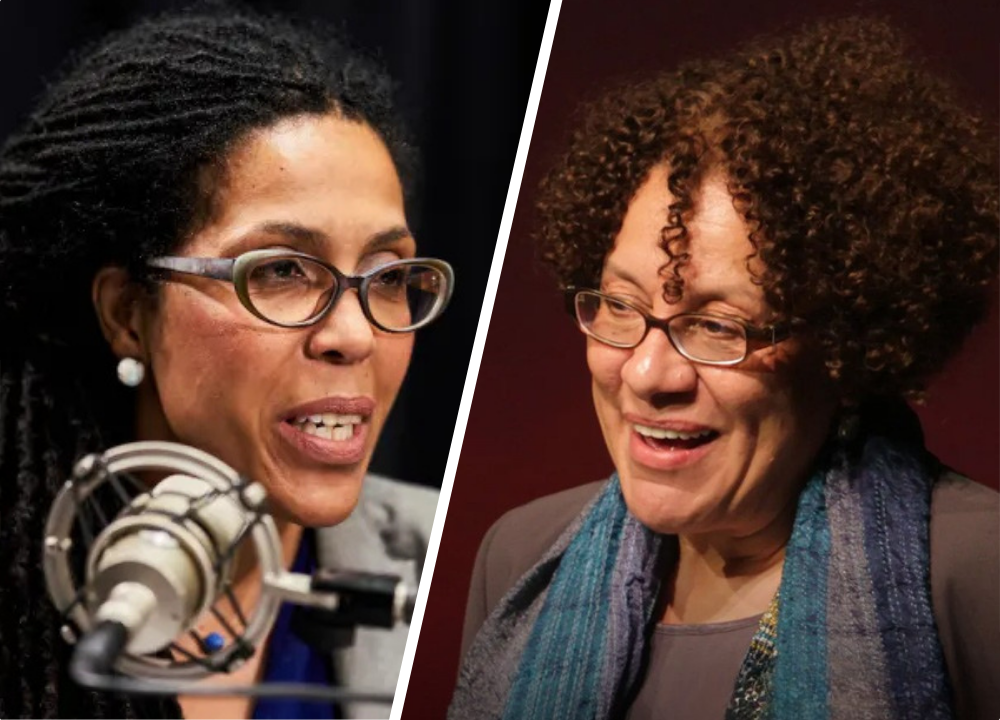
A testament to this legacy is her enduring collaboration with the incredible Dr. Johanna Fernández. As a prominent Black Latina academic and radio host, Dr. Fernández interviewed Miriam on several occasions. Together, they explored critical topics, including the history of the Young Lords, a movement Jiménez Román witnessed firsthand while living in East Harlem. Through these conversations, she offered a nuanced, multifaceted perspective on the legacy of the Young Lords, applying both a critical and an appreciative lens to their role in our society.
In an excerpted version of a one-on-one interview shared below, we are privileged to feature a more personal dialogue. Here, with the generous permission of Dr. Fernández, we present a transcript of their conversation where Miriam reflects deeply on life, Blackness, East Harlem, and so many other topics.
We invite you to read these reflections, which offer an intimate look at the life, scholarship, and intellectual rigor of a woman who fundamentally changed how we understand history.
Dr. Johanna Fernández: How do you self-identify?
Miriam Jiménez Román: I am a black woman, I am a black Puerto Rican woman, I am an Afro-Latina, I am whatever allows me to rescue both race and ethnicity. I’m conscious of the role of both in who and what I am.
Dr. Johanna Fernández: And how do you see the difference between the two?
Miriam Jiménez Román: One is cultural and the other one is a social construction, which I happen to be part of. Race is a physical manifestation. My culture is something that you’d have to discuss with me before you’d know it.
Dr. Johanna Fernández: And why do you think that it’s important to rescue both?
Miriam Jiménez Román: Because they’re often used against each other. In the United States, ethnicity is often used to deny race. So, you’re told, "You’re not black, you’re Puerto Rican," as if the two were mutually exclusive. By claiming both, I am saying that I have a specific cultural background—a language, a history, a way of being in the world—and I also have a racial identity that subjects me to certain experiences in this society.
When you deny one or the other, you’re losing a part of the reality of who people are. If you only look at my ethnicity, you miss the racism I face. If you only look at my race, you miss the richness of my cultural heritage. So for me, it’s about wholeness. It’s about being able to be all of who I am without having to choose one piece over the other.
Dr. Johanna Fernández: So why were you so aware of issues of race, and how did your consciousness around those issues evolve?
Miriam Jiménez Román: I think part of it was what was going on in my own family. My parents were quite typical in that they made those kinds of distinctions. In fact, my father’s nickname was "Nero," which I knew meant black in Italian. He used to – they called him that in the army. My father was very dark. I was also conscious of it because of school because the teachers were quite racist. I didn’t realize they were racist until later. Actually, I realized it when I was about 11.
I had two good friends. One was an African American girl, Diane, and one was a Jewish-Italian girl, Deborah. We were best friends, the three of us. The least intelligent of the three of us, the one who needed help all the time was Deborah, the Jewish-Italian girl. She just didn’t do as well in school. Diane was the smartest one and I was kind of in the middle.
When it came time to be recommended to go to a better school, the teacher only recommended Deborah. Diane’s mother then met with my mother and told her that couldn’t be, that our children are just as smart. So, they went down to the school and they were the ones that got us bust out to the Upper East Side. We went to a school on 70-something Street and 2nd Avenue, an all-white school.
I think that’s when the penny dropped. That’s when I realized that there was something else going on. I had been in the projects, I was in an all-black and Puerto Rican environment. Even though the teachers were white, they were "the teachers." But once I went to the school on the Upper East Side and I saw the difference in the way we were treated and how we were viewed, it became much more obvious.
Dr. Johanna Fernández: It also coincides with the high point of the Black Power movement.
Miriam Jiménez Román: Exactly. And I think partly the excitement—and why so many of us that grew up in that time were attracted by the civil rights movement and Black Power, by Malcolm and all of this stuff—is because it gave us a language in which to explain some of these things. It gave us a history. It gave us an understanding that it wasn’t an individual thing but it was a systemic problem.
And that made it much easier for me to breathe. It really was like being able to breathe because otherwise you always have to be on guard and you think it’s you. You know, "What did I do wrong? Why don't they like me?" or "Why am I being treated this way?" But when you realize that it’s a whole system that is set up to keep you in a certain place, then you can fight it. You can’t fight yourself, but you can fight a system.
I think that’s what the Black Power movement and the Young Lords and all of those movements did for us. They gave us the tools to understand our reality and the permission to change it.
…
Dr. Johanna Fernández: And what did your parents look like?
Miriam Jiménez Román: My father was a dark brown skinned man, my mother was I guess about my coloring but in the context of the Caribbean, Puerto Rico anyway and certainly the DR, she would have been considered a white woman. She had very straight hair... My father used to laugh, especially when I cut my hair, went natural. My father improved the race, and usually it’s that way; it’s the darker man and the lighter skinned woman, so he did what was expected of him and he did well for himself.
Dr. Johanna Fernández: Okay, so can you give me a sense of who your parents are, what they did for a living, and when they arrived here in the United States and why?
Miriam Jiménez Román: My parents were both born in [inaudible] in Puerto Rico in the late ‘20s, early ‘30s depending on which parent. They both come from rural backgrounds. My father was one of 12 children, the youngest boy of 12, very poor people. He cut cane, and so he joined the army. He and three or four of his brothers all joined the army because he got tired of cutting cane. My father had a third grade education. My mother was one of seven children by her mother, one of 20-something on her father’s side. Yeah, very huge. She grew up in the country, she went to high school. She had aspirations to be a doctor. Her father refused to pay for her studies so she met my father; that was the fallback. They came here right after my father left the army. My father stayed in the United States, saved money, and then had us – I was already born, had us come here when I was less than 2 years old.
Dr. Johanna Fernández: Do you remember the year when they came here?
Miriam Jiménez Román: In ’52.
Dr. Johanna Fernández: Do you know anything about your dad’s experience in the army?
Miriam Jiménez Román: It was horrible. They took him out of [inaudible] and sent him to Alaska. I mean, really horrible. We have a little series of photographs of him while he was in Anchorage... and you see my father and his only friend during that period, an African American guy, in these – you could see them because they’re these two little black dots in this mass of whiteness... This was when the army was desegregating and so my father was kind of a test case as a Puerto Rican. He was a citizen of the United States, and so – and he was black. Previous to my father... Puerto Ricans were being segregated as well, black Puerto Ricans... but this time they were desegregating so they put him in an all-white unit with very few exception.
Dr. Johanna Fernández: He became mentally ill as a result of his experience in the army?
Miriam Jiménez Román: I suspect so because whenever he had a breakdown my father would make reference to those years in the army. It would always be flashbacks of his period in the army. ... They found out about it in the army and they had him train others, whites, to cut hair, and once they would train my father was sent back to KP. He says he spent most of the army doing KP or boxing because he was also a boxer.
Dr. Johanna Fernández: And so, they moved to the projects, where were those exactly?
Miriam Jiménez Román: East River houses were between 102nd and 106th Street between the East River Drive and 1st Avenue. ... I think it’s significant because since there were few families in each building there was a sense of community. ... [but] this was the kind of place that was very much controlled so that all of your behavior was under observation. If a kid threw a piece of paper out a window the parents would be fined. Yes, no dogs allowed, no extended family, everybody had to be only the people who were on the lease. It was very, very controlled as I said, your morals, your behavior, everything.
…
Dr. Johanna Fernández: What did you know about the Young Lords when you were growing up?
Miriam Jiménez Román: I had gone to Vermont in September 1969. I came back for Thanksgiving. I saw Brenda and Brenda told me about the Young Lords. She was very excited about what they were doing and she was telling me about the Garbage Offensive.
Dr. Johanna Fernández: And what did you think?
Miriam Jiménez Román: Well, at first I thought it was kind of crazy. Burning garbage? But then she explained why they were doing it and it made sense. They were cleaning up the neighborhood, they were doing things that the city wasn't doing.
I was also working at ABLE [Academy for Black and Latin Education] that summer before I went to college. And one of the women I worked with, Iris, she was a Young Lord. I didn't know it at the time, she was just this very quiet woman who worked in the office. And then I saw her in the beret and the jacket and I was like, "Wow, Iris is a Young Lord!"
Dr. Johanna Fernández: So you saw them as a positive force?
Miriam Jiménez Román: In many ways, yes. They were an expression of the anger and the frustration that we all felt. They were smart, they were articulate, and they were doing something. They weren't just talking about it.
But I never joined. I was always a bit wary of the nationalism. For me, the "Spanish thing" was always a turn-off. It felt like another way of excluding people, of saying "you're not Puerto Rican enough" if you don't speak Spanish or if you don't follow certain traditions.
And there was also the issue of the role of women. There was a lot of talk about "supporting your man" and being a "revolutionary mother." That didn't sit well with me. I had already left the church because of those kinds of restrictions on women, and I wasn't about to join another organization that was going to tell me what my place was.
Dr. Johanna Fernández: So you were critical of their ideology even then?
Miriam Jiménez Román: Yes. I think they had some fundamental political contradictions. They were trying to be a revolutionary organization, but they were also tied to these very traditional, conservative notions of culture and family.
But at the same time, I respect what they did. They brought a lot of pride to the community. They showed that we could organize, that we could demand change. And they did some very practical things, like the lead poisoning testing and the breakfast programs.
I think the community realized that "they were ours." Even if people didn't agree with everything they did, there was a sense that they were fighting for us. And that was a very powerful thing.
Dr. Johanna Fernández: Tell me about the Academy for Black and Latin Education, how you became involved in that.
Miriam Jiménez Román: Well, that was right in my neighborhood. It was on 117th Street. It was an alternative school. That was in the summer of 1969. They were people from the neighborhood. Many of them were recovering addicts, alcoholics. Some people had been in prison. It was a place for them to get their high school equivalency.
They had been very successful because the teachers were people like us. I mean, I was only 18, but I was a teacher. I taught art and I taught English. Brenda and I both worked there. It was a very exciting place because there was this sense that people could change their lives.
And it was right in the middle of everything. The Young Lords were just starting to happen. The Black Panthers were around. There was a lot of talk about revolution and about taking control of our own lives and our own communities.
Dr. Johanna Fernández: And who ran it?
Miriam Jiménez Román: It was run by a group of people from the community. A man named Lou House was one of the people, and there were others. It was very much a grassroots organization. They didn't have much money, but they had a lot of energy and a lot of commitment.
And it was important for me because it was the first time I was in a position of authority, where I was actually teaching people. And these were people who were older than me, people who had lived much harder lives than I had. But they respected us because we were there, and we were trying to help.
I think that was part of the whole spirit of the time. This idea that we all had something to contribute, that we all had a role to play in the struggle. And ABLE was a very concrete example of that. It wasn't just talk; it was actually doing something to help people improve their lives.
…
Dr. Johanna Fernández: Now, were you aware at the time of revolutionary machismo?
Miriam Jiménez Román: Oh, definitely. I mean, the whole rhetoric of supporting your man—I mean, it was so blatant. And this whole thing about the revolutionary mother.
I was already—at 14, I had left the church because I couldn't stand the way women were treated. I mean, the idea that I was supposed to be subservient to some man just because he was a man was just not going to happen. So when I heard this same kind of rhetoric coming from these "revolutionaries," I was like, "Wait a minute. What kind of revolution is this?"
If the revolution means that I still have to be in the kitchen and I still have to be taking care of the kids while you're out there being the "revolutionary," then I don't want any part of it. And it was very much like that. I mean, the women were doing a lot of the work—they were the ones who were doing the breakfast programs, they were the ones who were doing the testing—but the leadership was all male.
And the way they talked about women was very paternalistic. It was all about "protecting" our women and "honoring" our women, but it wasn't about respecting us as equals. It was about us being in a particular place that served their needs.
Dr. Johanna Fernández: And did you ever have conversations with other women about this?
Miriam Jiménez Román: Oh, yes. Brenda and I talked about it all the time. We were both very much on the same page about that. And there were other women too. I think that was one of the reasons why the Young Lords had so much trouble later on, because the women started to demand more of a role and more respect.
But at the time, in 1969, 1970, it was still very much a male-dominated thing. And for me, that was a major turn-off. I just didn't see how you could have a real revolution if you were still keeping half the population in a subordinate position. It just didn't make sense to me.
…
Dr. Johanna Fernández: Can we continue this interview at some other point?
Miriam Jiménez Román: Sure, I’d be glad to talk with you.
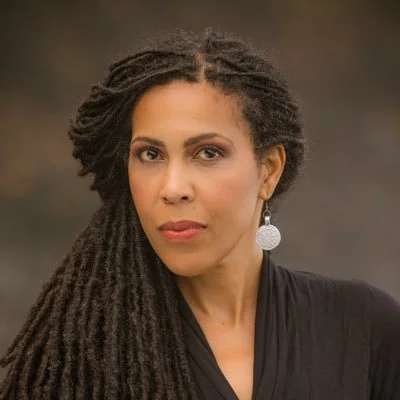
Johanna Fernández is the author of The Young Lords: A Radical History (UNC Press, February 2020), a history of the Puerto Rican counterpart of the Black Panther Party. She teaches 20th Century US history and the history of social movements.
Dr. Fernández’s recent research and litigation has unearthed an arsenal of primary documents now available to scholars and members of the public. Her Freedom of Information Law (FOIL) lawsuit against the NYPD, led to the recovery of the “lost” Handschu files, the largest repository of police surveillance records in the country, namely over one million surveillance files of New Yorkers compiled by the NYPD between 1954-1972, including those of Malcolm X. She is the editor of Writing on the Wall: Selected Prison Writings of Mumia Abu-Jamal (City Lights, 2015). With Mumia Abu-Jamal she co-edited a special issue of the journal Socialism and Democracy, titled The Roots of Mass Incarceration in the US: Locking Up Black Dissidents and Punishing the Poor (Routledge, 2014).
Among others, her awards include the Fulbright Scholars grant to the Middle East and North Africa, which took her to Jordan, and a National Endowment for the Humanities Fellowship of the Scholars-in-Residence program at the Schomburg Center for Research in Black Culture of the New York Public Library.
Professor Fernández is the writer and producer of the film, Justice on Trial: the Case of Mumia Abu-Jamal (BigNoise Films, 2010). She directed and co-curated ¡Presente! The Young Lords in New York, an exhibition in three NYC museums cited by the New York Times as one of the year’s Top 10, Best In Art. Her mainstream writings have been published internationally, from Al Jazeera to the Huffington Post. She has appeared in a diverse range of print, radio, online and televised media including NPR, The New York Times, the Wall Street Journal, and Democracy Now!.
Fernández is the recipient of a B.A. in Literature and American Civilization from Brown University and a Ph.D. in U.S. History from Columbia University.