Los Pilares de Cambio: Finding Miriam in the Heart of El Barrio
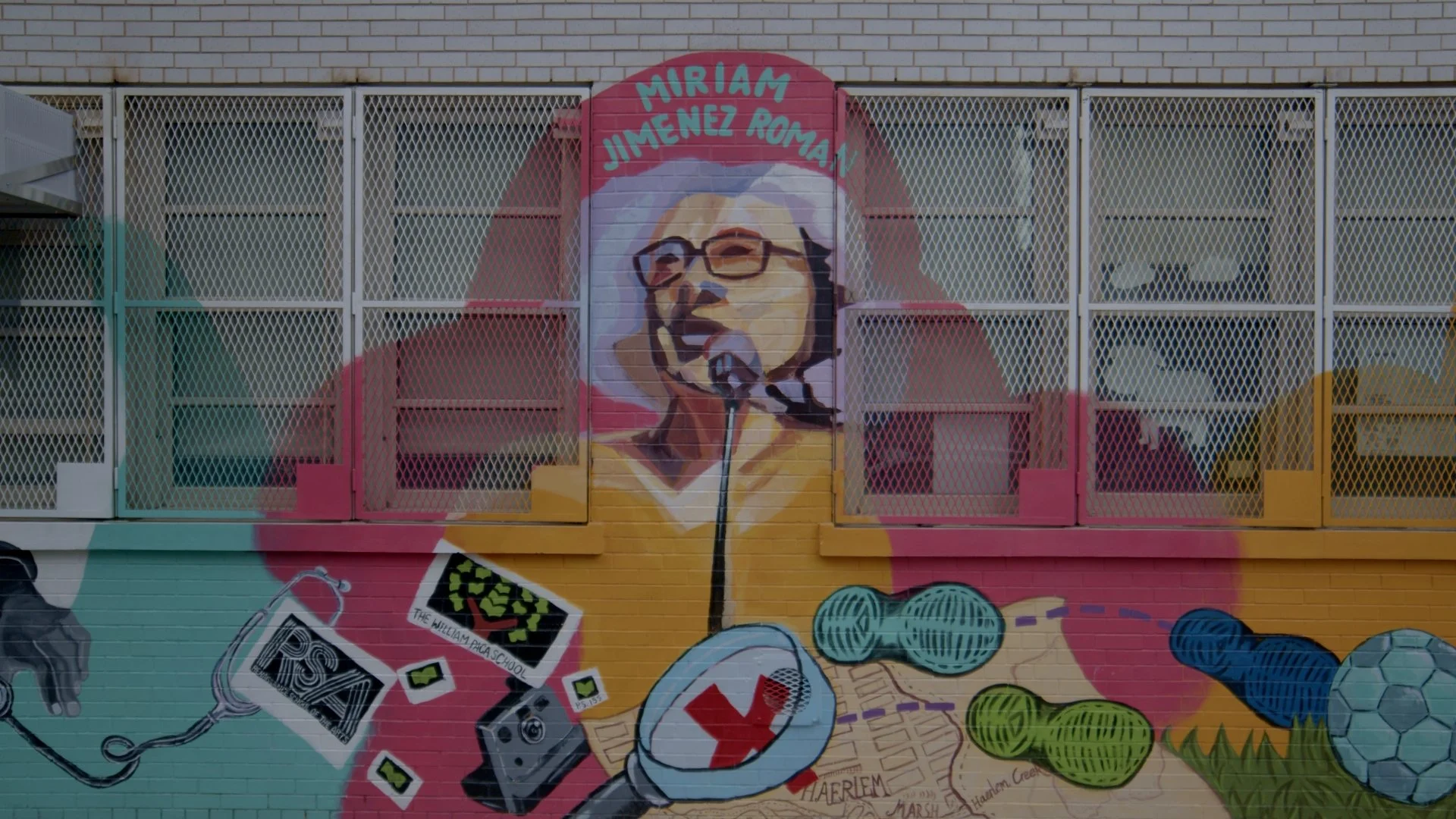
“‘Los Pilares de Cambio’ is a deep dive and homage to some of the many leaders of Afro-Latino communities” - Thrive Collective
by Guesnerth Josué Perea
As we prepare for the upcoming Cumbre Afro in Puerto Rico to celebrate the monumental legacy of Miriam Jiménez Román, I’ve been reflecting on a moment that felt like a quiet wink from Miriam herself. Miriam was more than a scholar to me; she was a mentor and a friend. Before she passed, she entrusted many of us with a specific mission: to continue the work of centering Blackness within the conversations of Latinidad and the census. It was while I was deep in this work, carrying out the very tasks we had discussed, that I "found" her alive and well in El Barrio.
In 2023, during an event focused on civic engagement and the census at Fordham Law School, an attendee approached me. After we spoke about the importance of AfroLatin@ visibility, he mentioned casually that he had just left an "offering" for Miriam at a mural in Harlem. I was taken aback. I knew Miriam’s heart and her literature and her treasured notebooks, but I hadn't realized the streets had already claimed her as an ancestor. He told me it was a massive piece on 117th Street. The very next day, I drove from Cypress Hills to East Harlem, a journey any true New Yorker knows is a test of patience, because I needed to see how the community was honoring the woman who had taught me so much.
What I found at the Renaissance School of the Arts (MS 377/PS 155), located on 319 E 117th St, Harlem, NY 10035, was breathtaking. The mural, titled Los Pilares de Cambio (Pillars of Change), was produced by Thrive Collective, under the direction of artist Ashley Crawford. If there is a dope mural in your neighborhood that stops you in your tracks, the likelihood is that the Thrive Collective are the ones who did it. As a non-profit dedicated to creating some of the most vibrant and intentional public art throughout New York City, they have left an indelible mark on my own community in Sunset Park, Brooklyn. What has always struck me about their work, and what they beautifully achieved with the Miriam piece, is the immense level of care and intention they place on representing the local community. They don't just paint walls; they curate to capture the soul of a neighborhood, ensuring that the art reflects and represents the people who live and breathe in those spaces.
I spoke with their Executive Director, Jeremy Del Rio, who shared how this project was a deep-dive homage to the leaders of AfroLatin@ communities. As Thrive Collective notes:
“The Pillars of Change is a deep dive and homage to some of the many leaders of Afro-Latino communities placed in the front of the schools’ building. Thrive Collective artists, Ashley and Plushie, collaborated with two schools... to create this impactful piece to inspire young leaders of the community to go after their ideas like the many leaders who did in the past.
What would have made Miriam incredibly proud is that the figures were chosen by the two schools who collaborated on the murals themselves. The principals of the schools chose the theme, while the students and teachers selected the icons who would grace the facade. The creation process was as impactful as the final image, especially considering that for many students, this project was their first real exposure to the arts:
“Ashley and Plushie [Thrive Collective Artists] conducted lessons with the students based on leadership, art-building skills, and representation. For many students, this project was their first time drawing, painting and getting familiar with art at all since P.S. 155 does not have an art department. We worked with 7 classes, over 100 students ranging between the ages of 9 years old to 13 years old. With help from the school faculty, on painting days we were able to create opportunities for the older students and staff to guide and lead the younger students along the painting process. It was an uplifting experience and brought together many supportive folks from the community to also help bring such a big project together..”
Miriam now stands there alongside other AfroLatin@ icons, immortalized in the neighborhood where she grew up. As urban folklorist Joseph Sciorra writes in RIP: Memorial Wall Art:
“The memorial wall transforms personal grief into shared public sentiment by serving as a vehicle for community affiliation and potential empowerment... urban memorial murals are communicative mediums that transform the deceased into symbols of neighborhood identity and turn their lives into cultural standards.”
By including Miriam, these students didn't just paint a face; they turned her life into a "cultural standard" for the youth of East Harlem. (You can see the incredible images of the students and community bringing this mural to life on the Thrive Collective website.)
Dr. Langston Collin Wilkins explains why communities do this: “Family, friends, and community members often commission street artists to paint these murals to ensure that their loved ones' lives and deaths do not get lost in time.” In the world of graffiti and Hip-Hop culture, this is a form of local divination, creating a public shrine for the community to congregate around.
One of the most profound aspects of Miriam’s life was her deep, I would even say spiritual, connection to Harlem. Her close friend and mentee, jazz professor Kwami Coleman, beautifully honored this bond in his debut album ‘Local Music’. The track 'Miri’s Voice' transforms her recollections into a vivid soundscape, capturing the very essence of her memories in East Harlem.
Even in her final days, Miriam found great solace in Harlem. Though she lived in Bed-Stuy to be near close friends like Dr. Zaire Dinzey-Flores, who walked beside her and cared for her as she moved ever closer to the realm of the ancestors, she constantly pondered moving back to East Harlem. She used to tell me, "I can’t get groceries in Brooklyn like I can in El Barrio." She wasn't literally talking about the produce; she was talking about the relationship she had with the place. It was her place of memory. Seeing Miriam on that wall, situated in the legacy of Arturo Schomburg, and many others, felt like a confirmation. She spent her life advancing the conversation on race, ethnicity, and culture, and now the city is reflecting that light back at her.
At the end of the day, a mural is paint and pigment, but we know it means so much more. As we head to Puerto Rico for Cumbre Afro, this mural stands as the New York anchor of her transnational legacy.
May your spirit continue to bridge East Harlem and Puerto Rico, Miriam, and continue to inspire us to connect to the fullness of who we are.
Honor Miriam’s Legacy with Us
As we continue the work Miriam entrusted to us, we invite you to join the conversation and the celebration of her life.
Attend Cumbre Afro: Join us in Puerto Rico as we bridge the gap between East Harlem and the archipelago, honoring Miriam’s transnational legacy. More Info Here.
Support the Vision: Learn more about the Thrive Collective and their work empowering students through public art at ThriveCollective.org.