Alma y Corazón: A Jazz Tribute to Miriam Jiménez Román
Introduction by Guesnerth Josué Perea
The work of Miriam Jiménez Román and Juan Flores has long served as a north star for many people, crossing borders of time, space, artistry and academic disciplines. While we will delve deeper into Juan’s enduring influence soon, today we look at how Miriam became the muse for a specific kind of memorial, one set to the cadence of the jazz she loved so dearly.
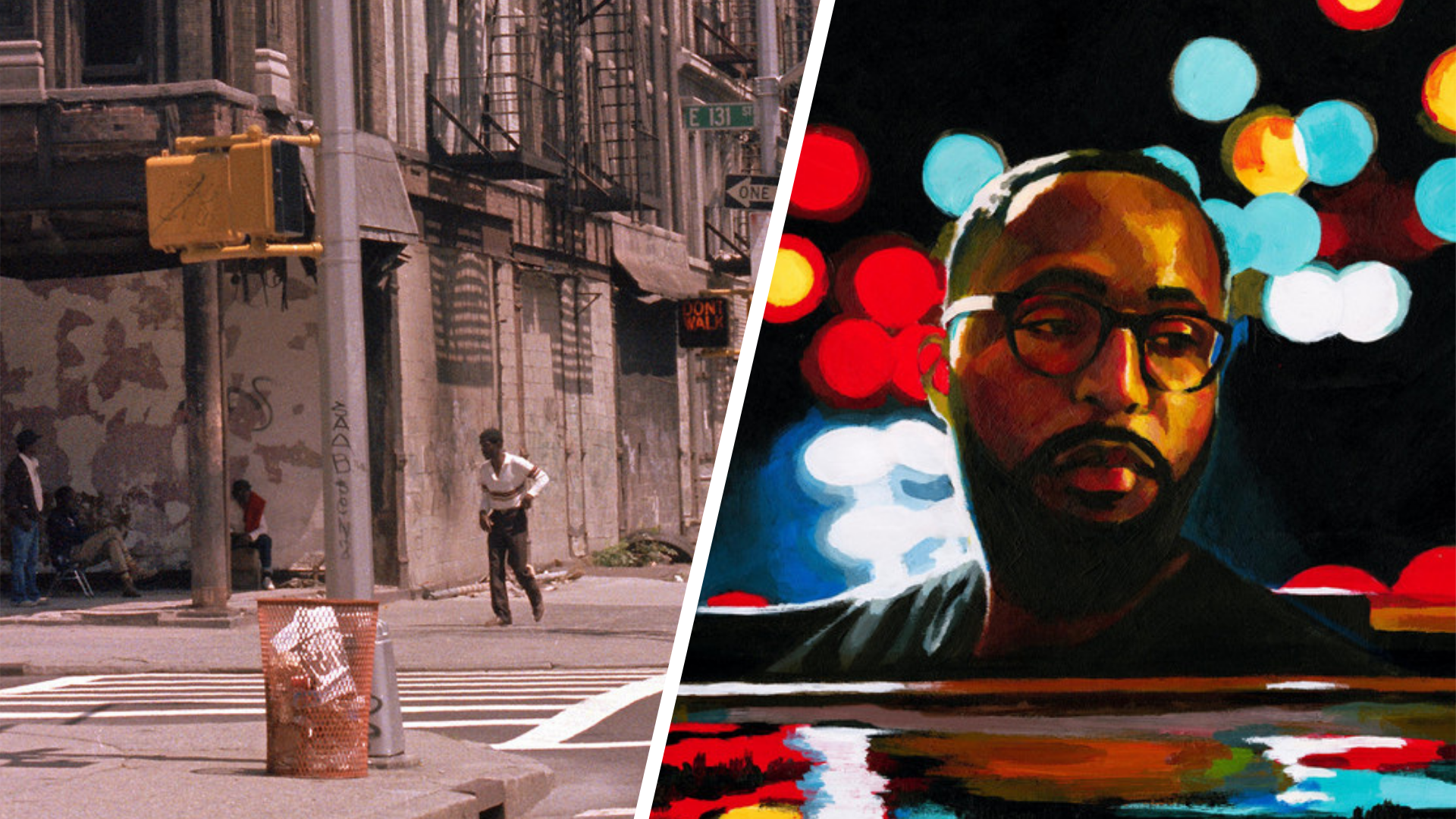
Miriam was memorialized by one of her “nephews,” Kwami Coleman, who sought to physically ground her spirit in Harlem, the place she called home after moving from Puerto Rico. I remember playing Kwami’s debut album, Local Music, on repeat during the pandemic. During a time when the city fell eerily silent, that album brought back the missing soundscape of New York. While it is uniquely Harlem, its energy is universal; those of us in Brooklyn can hear those same familiar rhythms walking down Flatbush Avenue, Fulton Street or through Fifth Avenue in my own neighborhood of Sunset Park. Kwami described Local Music as a project based on the concept of locality:
“this project was inspired by the concept of locality: a phenomenological experience tethered to a particular geographical place (a neighborhood, borough, or city) filled with the unique people, sounds, smells, rhythms, rituals, sights, and memories that can carry great symbolic power. our local environment can be foundational in our self-identification: a template for who we know ourselves to be, and our geographical and cultural anchor in the world. i wanted to write some music that sounds like it came from exactly such a place, and i drew upon my own relationship, personal experiences, and memories of _home_ to do it.”
On this pivotal album, featuring incredible musicians like AfroLatino bassist Vicente Archer, and renowned jazz drummer Marcus Gilmore, Kwami included a tribute originally titled "miri’s view." He later renamed it "love You, miri," transforming the piece into a profound proclamation of affection while still maintaining her unique cosmovision of the world and of Harlem. Below, you can listen to the track in full, hear Miriam’s voice, and read Kwami’s own words on why it was essential to include her in this work.
On “miri’s view/love you, miri” by Kwami Coleman
Miriam was more of a tía to me than the one I was related to by blood. It wasn’t necessary because of the quantity of time we spent together, but, like anyone of us who realize we share a soul with someone else, it was because of spirit — alma y corazón.
Miri was an uptown kid, like me, but she was of my parent’s generation. When I met Juan in college and our relationship evolved from student/professor to friends to something closer to familiares, it took me little time to realize how Miri was Juan’s intellectual and “spiritual” (in the way that your spirit keeps you alive) rock. They were each other’s rock. Miri had serious spirit. Miri saw no reason to mince her words. And if Miri cared for you even a little bit, she’d fry you.
Not all of us can take the sting of boiling hot oil. For whatever reason, this made me feel very close to Miri. And maybe she was curious about this kid her husband was hanging with, sometimes late night. We warmed up to each other pretty quickly.
When you seek to understand reality, especially as a young person, and you encounter someone who only knows how to keep it real, it can invite you to lean into them, to listen. And to maybe learn. Miri was someone of my parent’s generation who was cool as hell and kept shit real. I’d hang with Miri and Juan in Brooklyn, then eventually Palenville, NY, then, eventually eventually, Cabo Rojo. We’d eat together, drink beer, rum, and cognac, smoke cigarettes, later burn some marijuana. We’d talk music, New York City, politics, Blackness, academia, radical politics and how shithead men fucked up the 60s and 70s political movements. Sometimes, only rarely, Miri would talk to me about her life. But as fast as that would happen she would bid me and Juan goodnight, go to their bedroom, and that was the end of that moment.
Miri was a strong Black Caribeña woman. Her strength was her beauty, or certainly a big part of it. Her strength was her soul, or vice versa. She was an example of someone who was intellectually serious and deeply soulful. What an impression to make on a foolish but maybe also humble-enough young man like me! Through my radical tía I *really* learned what feminism, womanism, Afro-Latinidad was. I was never confused about these things, but Miri was a person in my life that, through words pero también sin palabra, demanded that I learn more about these important things. That I live and act with integrity. She didn’t even have to demand that I not be a comemierda, it’s more like I wouldn’t be able to face her if that’s what I actually turned out to be.
Why did I record her voice? I wanted to interview Miri, to follow up on those small crumbs about her life that she would share throughout the years. Miri, what was Harlem like when you were a kid? Miri, what was music in NY like when you were a teenager? Miri, what was it like when you lived, studied, and worked in PR? Miri, what was it like to work at the Schomburg in the 80s? Wait, so you said you were dating some handsome Black southern man at the time who drove a sports car? A convertible? Really? That’s crazy, Miri! What books were you reading? Why don’t you fuck with Hector Lavoe like that? Yea, you’re right, I already know the answer. I like Maelo better too.
One day, two or so years after Juan died suddenly (in 2014), after Miri had to leave the brownstone in Park Slope, I warned Miri that on my next visit to her apartment, in addition to bringing her cookies from Veniero’s (one of her faves) I would bring a digital recorder and capture some of those amazing stories. “Why, Mijo?” Because, Miri, recordamos básicamente dos categorías de personas: las gloriosas y las repugnantes. I’m sure I tried to say some slick shit like that, but I think ultimately Miri enjoyed that I took an interest in her story.
So I pulled up one day, either brought tea or beer (can’t remember), brought the Veniero cookies, and just asked Miri questions about her life and her thoughts on the world as we experienced it with the recorder running.
We finished after maybe an hour, and right when I had almost one foot out the door, I asked her: Miri, would you mind if I used some of what you said in a song? “Qué song, why?” I made up an answer. She said, “OK, querido, see you next time.” Un besito, and then she closed the door.
She lived for a few more very difficult years after that recording session. She heard the song I wrote with her voice in it. I think she found it touching. I don’t know how much she liked the song, though, because she didn’t like synthesizers and electric sounds too much. But she told me she appreciated it. And, like I said, Miri never bullshitted me. So I believed her and, si tuviera encontrar una razón, fue que maybe she felt like we shared something more important — a common spirit, alma y corazón.
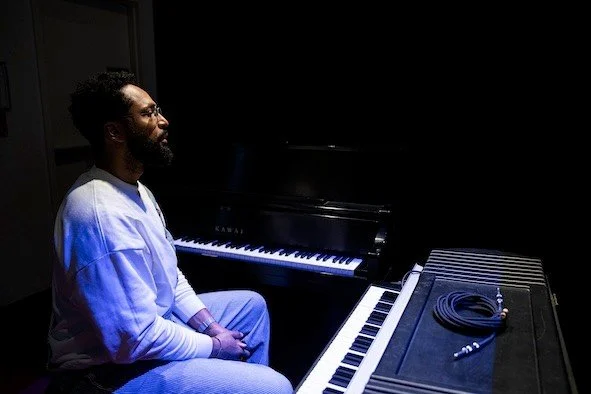
Kwami Coleman is a musicologist, music creator, and an associate professor at the Gallatin School of Individualized Study, New York University. He researches and writes on improvised and experimental music, American music history, jazz history, music and the African Diaspora, music's political economy, music aesthetics and technology, and culture. He is a pianist and producer who creates solo and collaborative work with electronics, machines, and other human beings.
Coleman's book, Change: The New Thing and Modern Jazz, published by Oxford University Press in September 2025, is a stylistic genealogy of the twentieth-century abstract music now referred to as free jazz, or jazz's new thing as it was known in the early 1960s. In it he makes connections between how and why artists created this work, its cultural significances, and its complicated reception in the music press of the 1960s and provides readers with ways to listen to and understand this innovative and disruptive music.
At Gallatin, Coleman teaches courses on American music history, music aesthetics, music and sound-based improvisation, and Black Music. He has, as a composer, premiered commissioned work for the Studio Museum of Harlem, Maysles Documentary Center, and the March on Washington Film Festival and continues to perform internationally. Currently, Coleman is at work on several recording projects following his 2017 full-length album Local Music.
Coleman was a founding member of the Afro-Latin@ Forum, a non-profit organization devoted to the study and increased visibility of Latines of African descent created by the late Juan Flores and Miriam Jiménez Román.