
Trump’s Proposal to End Racial Statistics Squanders the Hard-won Gains of the Civil Rights Movement
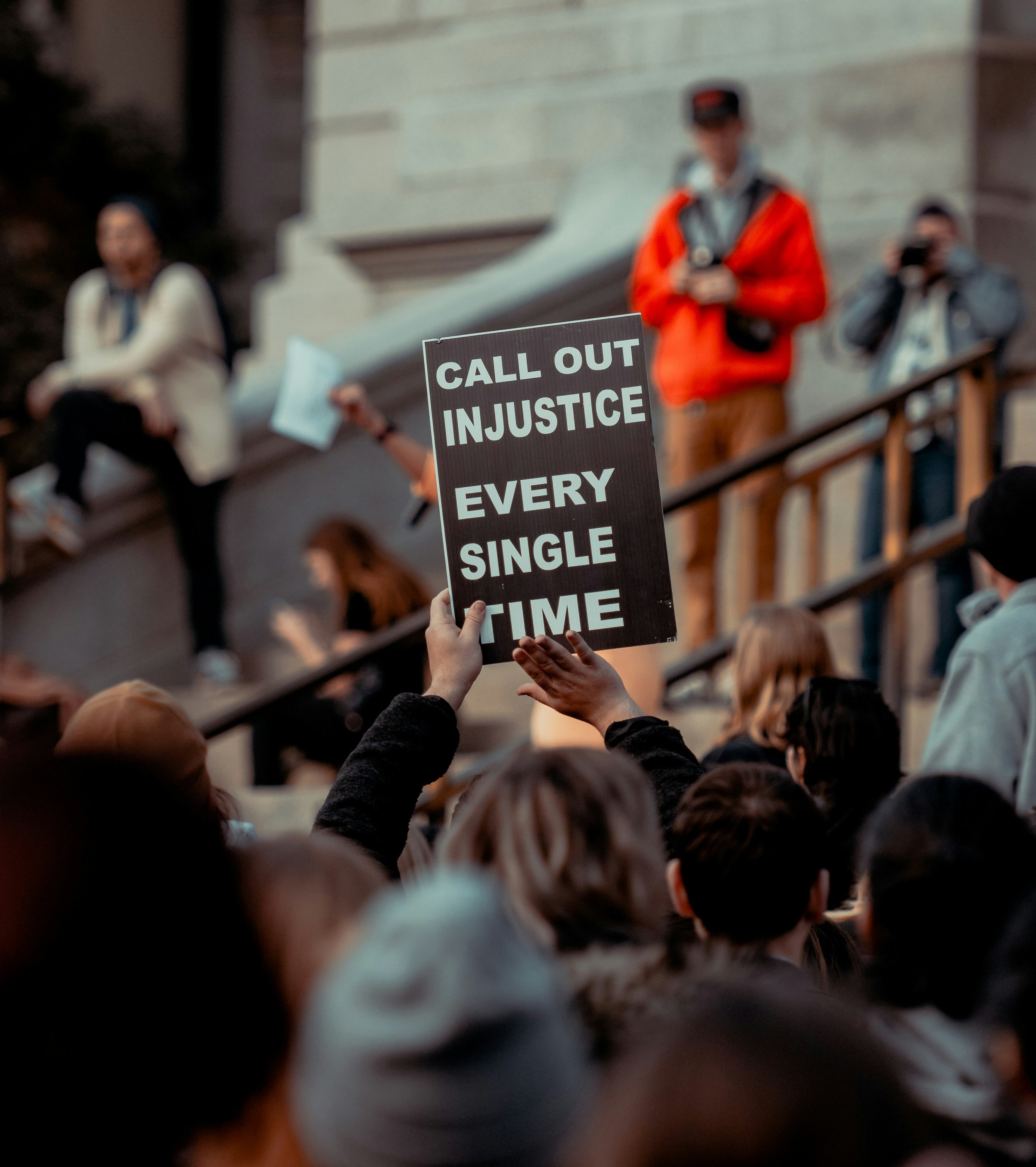
Photo by Colin Lloyd on Unsplash
by Ricardo Henrique Lowe, Jr.
My time as a lecturer at UT Austin ended six months ago, back when my home department of African and African Diaspora Studies was targeted for elimination at the advisory of the Trump administration.
Prior to my departure, I faced attacks from local conservative outlets for my teachings about race and ethnicity through the lens of statistics.
In their view, statistics was no more than a set of stochastic equations that had no place in ‘identity politics.’ Using them to understand racial stratification was seen as non-empirical, pseudo-scientific, and too “woke” for their new vision of the all-American university.
This condemnation of racial statistics has now found its way into the Federal Register. Evidently, the Trump administration has come to the sudden revelation that race is a social construct and is now weaponizing this fact to justify the elimination of race and ethnicity questions from the 2030 census.
The motivation behind this proposal is not tied to any serious effort to eradicate racial stratification in society. As noted by social statistician Tukufu Zuberi, deracializing statistics without a conscious effort to dismantle racial stratification would be like “putting the cart before the horse.”
Instead, the proposal appears part of a larger effort to squander the statistically-driven social gains achieved under the civil rights movement.
For instance, the Trump administration this past summer called for the Equal Employment Opportunity Commission (EEOC) to stop collecting demographic data on employee discrimination, claiming that these data were anti-meritocratic, reverse discriminatory, and unconstitutional. In reality, these data exist for the sole purpose of monitoring compliance with anti-discrimination provisions set for the workplace, as specified in the Civil Rights Act of 1964.
Using EEOC data, researchers have found that Black women appear more likely to be dually discriminated in the workplace based on their race and sex and have benefitted the least from equal opportunity policies compared to their white male and female counterparts. These facts are particularly critical in light of the mass firing of more than 95,000 Black women federal employees last year under the direction of the Elon Musk-led Department of Government Efficiency (DOGE).
The targeting of race and ethnicity questions in the census has an even broader effect.
A closer look at the proposal reveals that Trump officials interpret race and ethnicity as “immaterial personal characteristics” that divert the census from prioritizing congressional apportionment. Yet research shows that discarding race and ethnicity data not only undermines the Voting Rights Act of 1965, but can dilute the electoral power of minority voters and deliver a partisan edge to less preferred candidates. The latter detail is particularly interesting given the record number of states in the last year that have adopted new congressional maps at the urging of the Trump administration.
Beyond voting, the proposal also ignores that census counts on race and ethnicity serve as vital population denominators for several social indicators. This means that basic demographic measures will become incalculable without these data. As an example, the national infant mortality rate stands at 5.6 deaths per 1,000 births. When disaggregated by race, those same rates approach a staggering 10.9 deaths per 1,000 births for Black infants and around 9 deaths among both Native Hawaiian/Pacific Islander and American Indian infants.
Despite these facts, some will argue that racial statistics are no longer necessary in a multiracial society, and that rising racial diversity makes these data obsolete.
On this matter, it is important to note that many census officials across Latin America used this same rhetoric to justify the removal of their own race questions in the mid-20th century. Removing these questions, however, did not make racial inequality disappear. A 2018 report from the World Bank Group reveals that nearly half of all Latin Americans living in poverty are of African descent. This observation only became statistically evident after the reinsertion of a race variable in national censuses across the region.
As the deadline for public comment on this proposal approaches, we must acknowledge a stark reality: We do not live in a colorblind society. The push to eliminate racial statistics does not bring us any closer to one. Instead, it allows racial discrimination to persist unmonitored, irreversibly threatening the hard-won gains of the civil rights movement.
Ricardo Henrique Lowe, Jr. is a demographer, former federal statistician, and lecturer of racial statistics. The views and opinions expressed in this piece are solely those of the author.